
How Jimmy Page turned rooms, distance, and reversed tape into instruments, and produced every Led Zeppelin album into something no other band of the era could match
Before Jimmy Page was a guitar hero, he was a hired hand. In the mid-1960s, he was one of the busiest session guitarists in London, playing on an enormous number of records for other artists, including Petula Clark, Brenda Lee, and Marianne Faithfull.
It was steady, professional work, and the endless grind of playing on other people’s songs eventually wore him down. But Page did something with those years that most session players never thought to do.
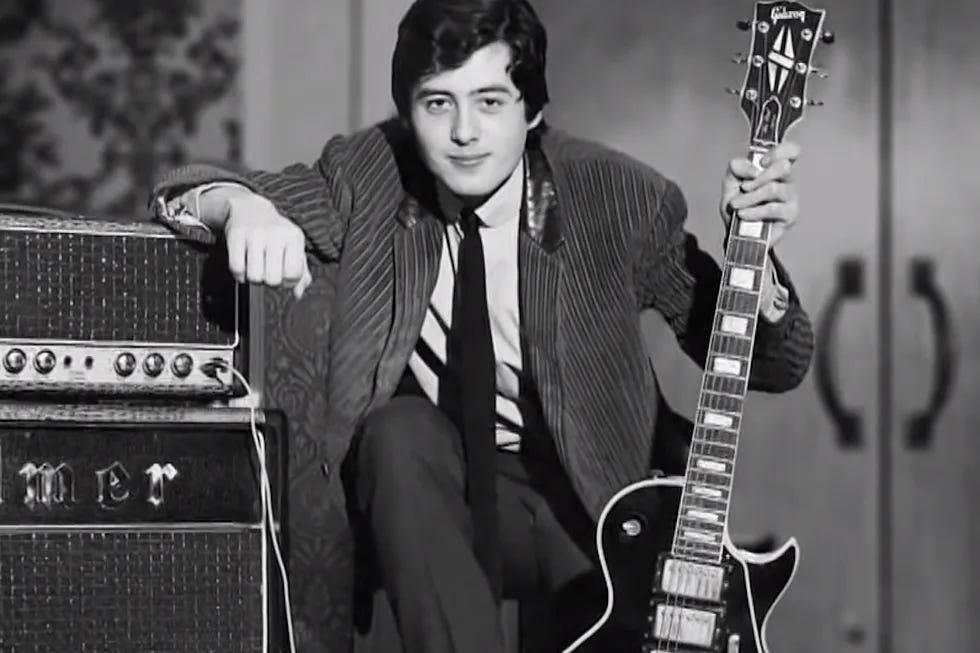
He treated the studio itself as a classroom. He watched the engineers. He studied how records were actually built, where the microphones were placed, how overdubs were stacked, and why one recording sounded alive and another sounded flat.
He later said he took it on almost as an apprenticeship, genuinely wanting to learn from the recording engineers how things were done. He even turned down invitations to join the Yardbirds at first, partly because staying a session man let him keep learning the craft of recording from the inside.
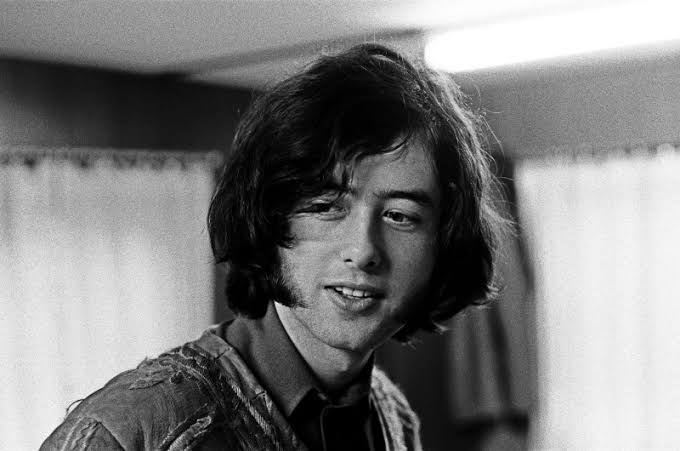
That choice is the hidden foundation of everything that followed. When Page finally formed Led Zeppelin at the end of the 1960s, he did not walk into the studio as a guitarist hoping an engineer would capture his sound.
He walked in as the producer, the man behind the desk, with a fully formed idea of how he wanted records to feel and the technical knowledge to get there. He produced every single Led Zeppelin album. The band’s sound, the thing that makes a Zeppelin record recognizable within seconds, is not just four musicians.
It is Page’s production, and his production was built on one radical idea for its time. The room is an instrument. The space around the sound matters as much as the sound itself.
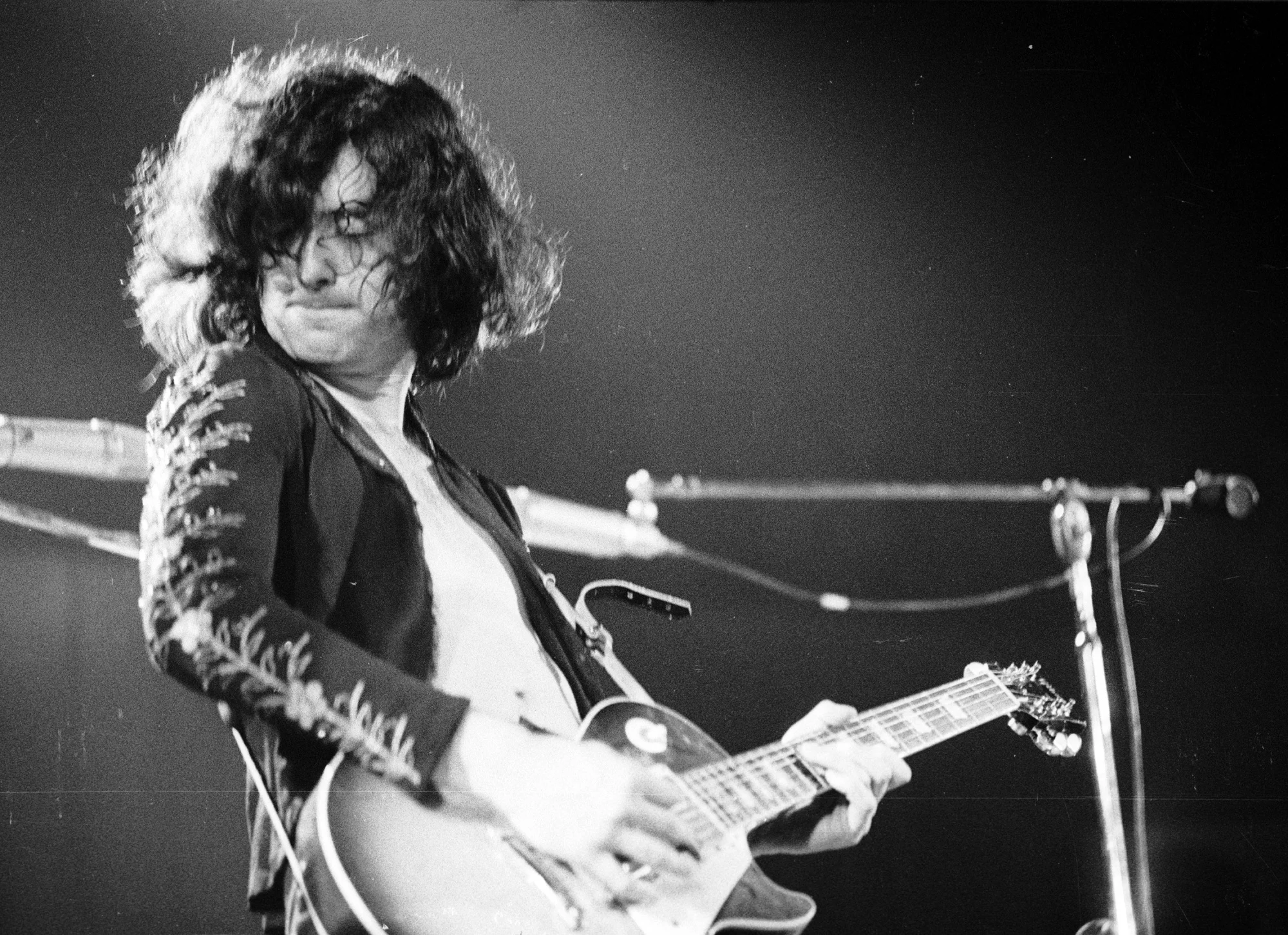
To understand why that was radical, you have to know what everyone else was doing. In the late 1960s, the standard British method was to jam a microphone right up against the amplifier and the drums, capturing the sound at its source and nothing else. The results, especially on drums, were thin and boxy.
Page was blunt about it. He said the day’s drum sounds sounded like cardboard boxes. He had instead fallen in love with the recordings coming out of American studios like Sun and Chess in the 1950s, where a single well-placed microphone could capture a whole band live, and the guitars still sounded enormous.
From studying those records and those engineers, Page took an old recording maxim and made it the center of his whole approach. Distance equals depth.
Here is what that phrase actually meant in his hands. Instead of placing a microphone directly against a guitar amplifier, Page would set up an additional microphone some distance away, sometimes as far as 20 feet back, and then record the blend between the close sound and the distant sound.
The distant microphone captured the sound after it had traveled across the room, picked up the natural reverberation of the space, and returned with a sense of air and size the close microphone alone could never give.
By doing this, Page became one of the first British producers to deliberately record a band’s ambient sound, the sound of the room itself, the tiny time-lag of a note traveling from one end of a space to the other. He was not recording a guitar. He was recording what a room does to a guitar, and that became a sound no close microphone could fake.
This philosophy produced one of the most famous drum sounds in all of recorded music, and it shows the idea taken to its purest extreme. For “When the Levee Breaks,” recorded at a country house called Headley Grange, Bonham’s kit was set up at the bottom of a three-story entrance hall with a stairwell winding up above it.
Rather than crowding the drums with close microphones, the engineer, following the ambient philosophy Page championed, hung just a couple of microphones high up on the stairs, far above the kit, and let them capture the drums as the whole cavernous hall heard them.
The sound that came back was colossal, heavy, and cavern-deep, a drum sound so enormous it has been sampled by countless artists across hip-hop and electronic music in the decades since. Nobody built that sound with studio trickery.
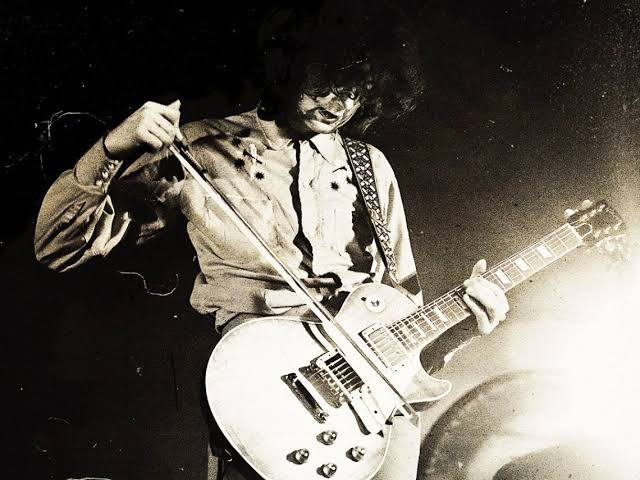
Page and his engineer built it by understanding that if you give a great drummer a big live room and stand back far enough, the room will hand you something no close microphone ever could. Distance equals depth, made audible.
The same thinking governed how Page recorded his own guitar, and it is laden with lovely irony. People imagine Led Zeppelin’s massive guitar sound came from massive walls of amplifiers. It did not.
John Paul Jones, the band’s bassist and a witness to all of it, explained that Page often used a really small amplifier and simply mic’d it up extremely well so it sat perfectly in the sonic picture. On the debut album, one of the biggest-sounding guitar records ever made, Page used a small combo amp.
The size of the sound came not from volume but from craft, from knowing that a modest amplifier, captured with the right microphones at the right distances in the right room, could sound gigantic. It is one of the great lessons of his production. Bigness is an illusion built by technique, not brute force.
Page did not stop at capturing sound the way it really was. He also loved to bend and reverse it, and his favorite trick was something he called backward echo, a technique he claimed to have invented himself back in his Yardbirds days. Normally, an echo follows the sound that makes it: a shout, then its fading repeat.
Page worked out how to make the echo arrive before the sound instead, so you hear the ghostly swell rising up into a note rather than trailing away from it. He achieved it by flipping the tape over, recording the echo onto a spare track while the tape ran backward, then flipping it back the right way so the echo now preceded the signal.
You can hear this eerie, sucking, backward bloom on tracks like “Whole Lotta Love,” where it helps create the disorienting, otherworldly middle section. It is the sound of a producer treating the tape machine itself as an instrument, playing the physics of recording the way he played his guitar strings.
Then there was his approach to layering guitars, building not a single guitar part but an entire orchestra of them. Page thought of himself as far more than a riff player, and in the studio he would stack guitar upon guitar, each panned and placed to build a wall of sound that moved and breathed like a section of an orchestra.
On the towering “Achilles Last Stand,” from the album Presence, he layered a small army of guitar tracks into a galloping, interlocking web, planning each part so they combined into something enormous and architectural rather than a simple lead over rhythm.
This was composition happening at the mixing desk, arrangement as an act of recording. The guitar army was not played live in one take. It was constructed, layer by deliberate layer, by a man who heard the finished cathedral in his head before he laid the first stone.
For all this obsession with sound, Page was also astonishingly fast and efficient, another gift from his session years, where studio time was money, and you learned to work quickly or not at all.
Because he and the band rehearsed thoroughly before recording and because Page knew exactly what he wanted and how to get it, the first Led Zeppelin album, one of the most influential debut records in rock history, was recorded and mixed in around thirty hours of studio time.
Years later he made the album Presence, a dense and complex record, in under three weeks, with the Rolling Stones waiting to use the same studio and pressure bearing down on him the whole time. Knowing his way around a studio meant Page never wasted motion. He knew when a take was right and, just as importantly, when to walk away from a song rather than kill it with endless fussing.
Page was also deliberate in a way most people never notice. He intentionally changed engineers between albums, working with Glyn Johns on the first record, Eddie Kramer on the second, Andy Johns on the third and several after.
This was not restlessness. It was a producer refusing to let the band’s sound settle into a formula, bringing in fresh ears and different technical instincts so that each record could evolve rather than repeat. He was managing not just the music but the very process of making it, steering the whole enterprise toward growth.

When Page reflected on his own legacy, he did not ask to be remembered for his riffs, famous as they are. He said that many people thought of him as just a riff guitarist, but that he thought of himself in broader terms, and that as a producer he wanted to be remembered as someone who could sustain a band of rare individual talent and push it to the forefront throughout its career.
He believed he had captured the best of Led Zeppelin’s growth and change on tape, the full multifaceted gem of the band. That is the truest way to understand him. The guitar was one of his instruments. The recording studio, the microphones, the rooms, the tape machines, the distance between a sound and the ear that captures it, all of that was his instrument too, and he played it as brilliantly as he ever played the guitar.
This is why Led Zeppelin sounds like Led Zeppelin. Jimmy Page saw it before anyone else in British rock did, and he saw it further than they ever would. A record is not a photograph of a band playing in a room. It is the room, captured and shaped and built into the song until you can no longer tell where the music ends and the space begins.