
How the founder who named the band, wrote its first songs, and lit its early fire burned out in barely two years, and why his ghost haunted Pink Floyd for the rest of their career
Roger Keith Barrett was born on 6 January 1946 in Cambridge, England, into a comfortable, educated family. A childhood friend gave him the nickname Syd, and it stuck for life.
He was, by every account of those who knew him young, a genuinely gifted and charismatic boy, drawn equally to music and to painting, good at both, the kind of person other people naturally gathered around. He picked up the guitar early and fell in love with jazz and blues.
He was also, and this matters to the whole story, a serious visual artist, someone who saw the world through a painter’s eye as much as a musician’s. That double gift, the painter and the musician fused into one person, is a large part of what made his songwriting so unlike anyone else’s when it arrived.
In Cambridge he moved in a circle of bright, artistic young people, and two of the friendships he formed there would shape the rest of music history.
He knew Roger Waters, a local boy a few years older. And while studying, he met David Gilmour, with whom he bonded over music, went to concerts, and even busked together on the streets. Hold onto that detail, because the friendship between Barrett and Gilmour becomes one of the quietly devastating threads of this story.
In 1964 Barrett moved to London to study painting at Camberwell College of Arts, and it was there, pulled between the easel and the guitar, that the band began to form.
Waters was already playing with two fellow students, drummer Nick Mason and keyboardist Richard Wright. Barrett joined, and the group cycled through a few names before Barrett himself supplied the one that stuck.
He combined the first names of two obscure American bluesmen he admired, Pink Anderson and Floyd Council, and called the band Pink Floyd. In these early days, Pink Floyd were a fairly ordinary British blues covers group, like dozens of others. What transformed them into something new was Barrett, because he began to write, and what he wrote sounded like nothing else in Britain at the time.
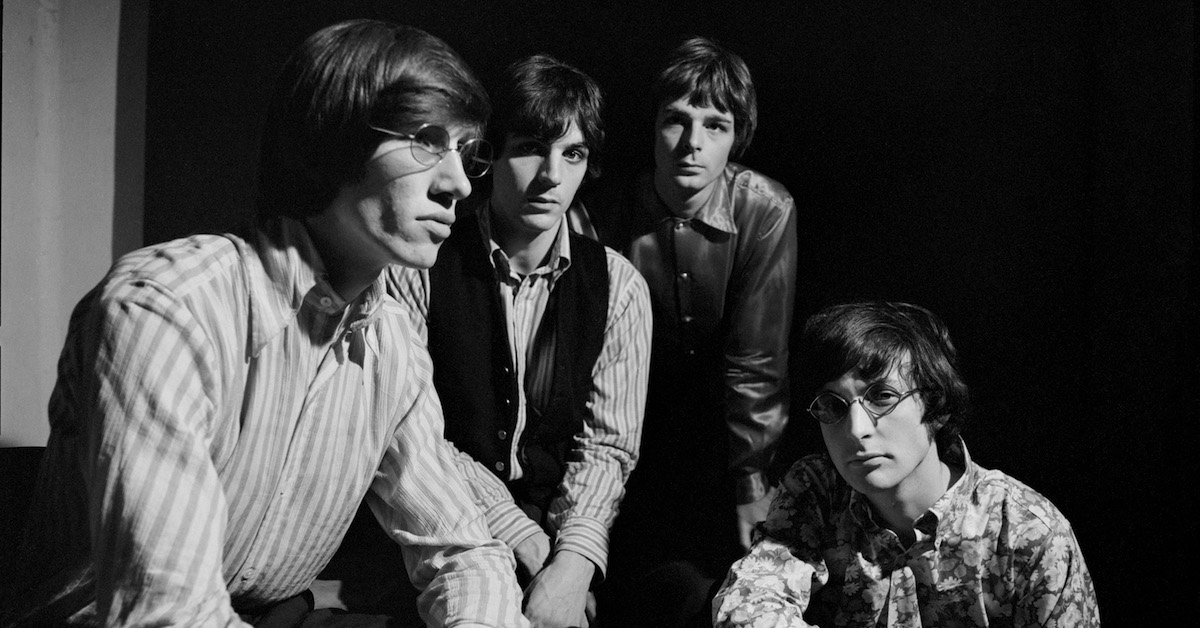
His songwriting was the engine of everything that made early Pink Floyd special. He fused blues, English music-hall whimsy, childlike storytelling, and the swirling, mind-bending textures of psychedelia into songs that were playful, strange, and entirely his own.
He wrote about garden gnomes, about a man who steals women’s clothing from washing lines, about scarecrows and cats and fairy-tale imagery, all delivered in a very English, stream-of-consciousness style.
On stage and in the studio he treated the guitar as a sound-painting tool, sliding objects along the strings, drenching everything in echo, detuning and experimenting, using the instrument to create colors and textures rather than just notes.
He was painting with sound. The band’s dazzling early live shows, with their pioneering light displays, became a sensation in London’s underground scene, and Barrett was the luminous center of them.
The results came fast. Pink Floyd’s debut single “Arnold Layne,” Barrett’s quirky, catchy song about the washing-line thief, cracked the UK Top 20 in early 1967. The follow-up, “See Emily Play,” did even better, pushing them toward real fame.
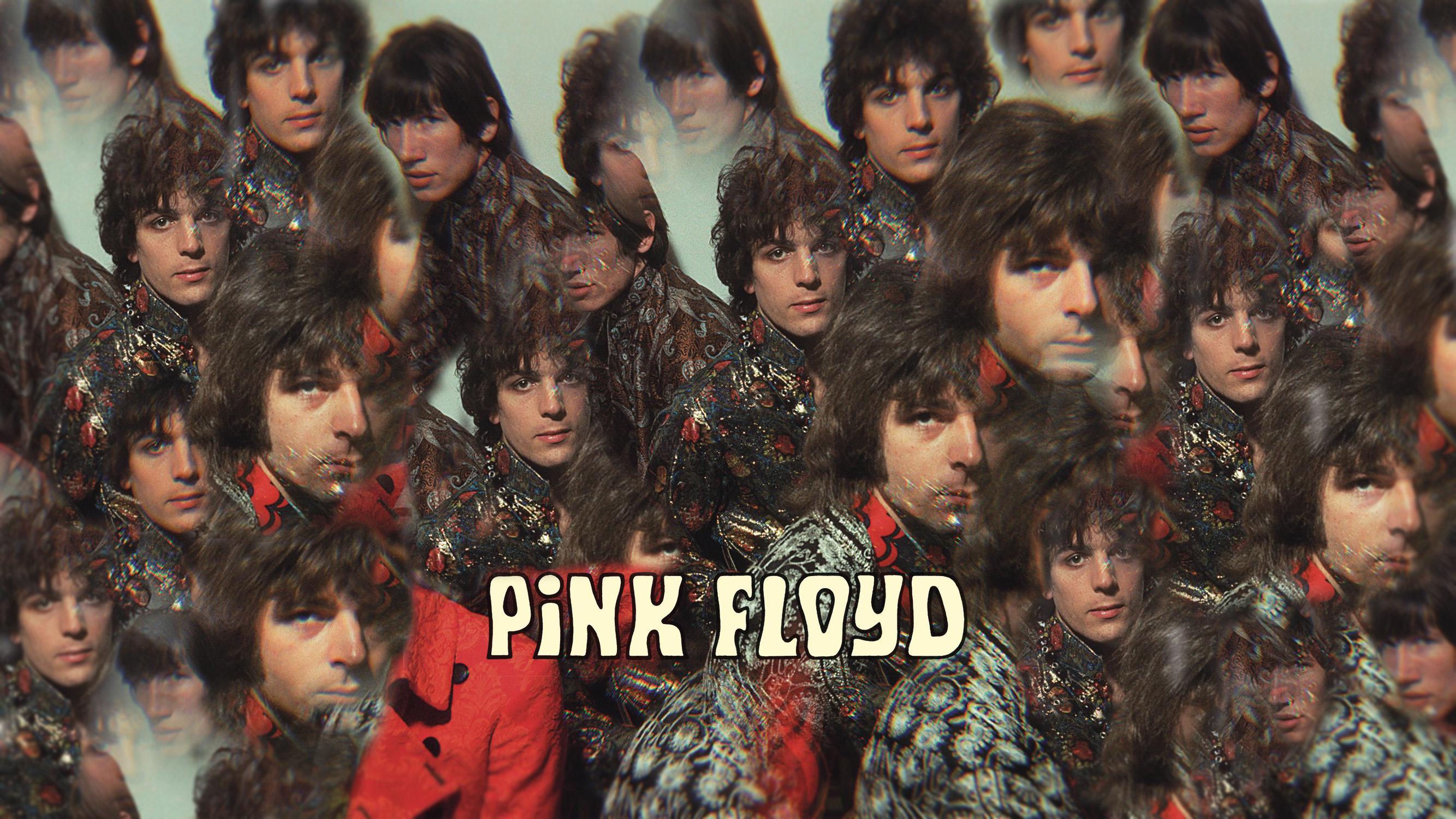
Then, in 1967, came the album that remains Barrett’s monument, The Piper at the Gates of Dawn. He was the overwhelming creative force behind it, writing eight of its eleven songs outright and co-writing two more. The record was a critical and commercial success, establishing Pink Floyd as leaders of the emerging psychedelic movement.
Barrett was barely twenty-one years old, the principal songwriter, lead singer, guitarist, and public face of one of the most exciting new bands in the country. Everything was in front of him. And it was at almost exactly this peak that the decline began.
The story of what happened to Syd Barrett has to be told carefully, because it has been wrapped in rumor and myth for decades, and the truth is both simpler and sadder than the legend.
Through 1967 and into 1968, Barrett’s behavior became increasingly erratic and unpredictable. The widely reported cause was his heavy use of psychedelic drugs, most prominently LSD, in an era and a scene where such experimentation was common, and its dangers barely understood.
Whatever the full mix of causes, and it is worth being honest that no one can fully separate the effects of the drugs from other factors, his mental health deteriorated, and it did so in public, on stages, in front of cameras.
The accounts from this period are painful. At concerts, bandmates would watch him strum a single chord through an entire show, or stand with his guitar and not play at all. At one show in San Francisco, during a performance, he slowly detuned his guitar string by string while the audience, thinking it was an avant-garde stunt, enjoyed it, unaware of the band’s growing alarm.
In television appearances, he would give one-word answers or stare, silent, at the interviewer. During a tour, the band sometimes had to bring in a substitute guitarist because Barrett either did not turn up or could not perform.
The brilliant, charismatic young man who had named the band and written its songs was, in front of everyone, slipping somewhere the others could not follow.
The band’s solution was, at first, a kindness that could not hold. Early in 1968 they brought in Barrett’s old Cambridge friend David Gilmour as a second guitarist, initially to cover for the increasingly unreliable Barrett, so the band could keep functioning while keeping Syd in the fold. For a brief period, Pink Floyd was a five-piece.
The plan then shifted to an even gentler idea. Perhaps Barrett could stop touring and performing altogether and remain as a behind-the-scenes songwriter, the creative source without the pressure of the stage, much as another troubled genius, Brian Wilson, had done with the Beach Boys. But even that proved impossible.
His condition made reliable songwriting unworkable too. And so, in an act the surviving members have spoken about with sadness ever since, the decision was made. One day, driving to a show, someone in the car did not suggest picking Syd up. By March 1968, he was officially no longer a member of the band he had founded, named, and defined.
What followed is one of the cruelest contrasts in music history. Within just a few years, the four remaining members of Pink Floyd, with Gilmour now on lead guitar and Waters increasingly shouldering the songwriting, evolved into one of the biggest bands in the world, selling tens of millions of albums with The Dark Side of the Moon and filling arenas as rock gods.
And the man who had started it all, whose vision had made them possible, watched from the outside as his own musical career sputtered and died. Barrett made a chaotic, disjointed attempt at a solo career, producing two albums in 1970, The Madcap Laughs and Barrett, on which Gilmour and Waters, still caring for their lost friend, actually helped him.
There are flashes of the old brilliance on those records, but they are fragile, unsettling, difficult listens, the sound of a gift breaking apart. By the mid-1970s, Barrett had withdrawn from music and public life almost entirely.
There is one moment from these years that has become legend because it captures the whole tragedy in a single scene. In 1975, while Pink Floyd were in the studio recording Wish You Were Here, an album largely inspired by and dedicated to Barrett, an overweight man with a shaved head and shaved eyebrows wandered into the session.
For a while, no one recognized him. It was Syd. He had changed so completely that his own bandmates, the friends who had written the album about him, did not know him at first. Accounts describe some of them becoming tearful once they realized who it was. He had turned up, by pure coincidence, on the very day they were working on the song that was their tribute to him.
That song was “Shine On You Crazy Diamond,” and it is the most important part of Barrett’s legacy after Piper. Waters wrote it directly about Barrett, a long, aching lament for the friend they had lost to his own mind, and it opens with those four slow, mournful guitar notes from Gilmour that have become some of the most recognizable in all of rock.
The whole of Wish You Were Here, and much of the band’s later obsession with themes of absence, madness, and alienation, flows from the hole Barrett left behind.
This is why his ghost is said to haunt Pink Floyd. He was only truly in the band for about two years out of a career spanning three decades, yet his absence shaped their greatest work. They became, in a sense, a band about the person who was no longer in it.
Barrett’s later life was quiet and private, and deserves to be described with respect rather than as a freak show. In 1978 he moved back to Cambridge, to live near family, and he returned to the thing he had loved as a boy alongside music. He painted. He gardened.
He became a private man who disliked being photographed and kept largely to himself, interacting mostly with his sister. He was never formally diagnosed with a specific mental illness and, by most accounts, lived out his decades in relative peace, away from the noise of the fame he had walked away from.
He did not attend when Pink Floyd, of which he was a founding member, was inducted into the Rock and Roll Hall of Fame in 1996. He had, by then, been Roger Barrett the painter for far longer than he had ever been Syd Barrett the rock star.
He died in Cambridge on 7 July 2006 at the age of sixty after an illness. His former bandmates released a statement calling him the guiding light of the early band and saying he left a legacy that continues to inspire.
The lasting question about Syd Barrett is the one his story forces on everyone who learns it. What would he have made if the fire had not burned out so fast? He was musically active for less than a decade, and his truly brilliant window lasted only two or three years. Yet, in that tiny span he named a legendary band, wrote a psychedelic masterpiece, and pointed the way toward a whole movement in British music.
He is remembered not for a long body of work but for an intensity, a flash of pure originality so bright that it lit the path for others long after it went dark in him. That is the real meaning of the diamond in that famous song. Something rare and dazzling, formed under enormous pressure, and lost before the world was ready to let it go.
Syd Barrett is a reminder that genius and fragility often live in the same person, and that the very sensitivity that lets someone see the world in a way no one else can is sometimes the thing that makes it hardest for them to survive in it.
Pink Floyd spent the rest of their career, consciously and unconsciously, singing about the friend they lost at the very start. The band the world came to know was built on the foundation he laid and shadowed by the absence he left.
He was there for the beginning; he made the beginning possible, and then he was gone, and everything they became afterward was, in part, an answer to that loss.