

How Stevie Nicks turned the collapse of her band and her love affair into the songs that made Fleetwood Mac immortal, and why writing became the way she survived it
In 1973, Stevie Nicks was twenty-seven years old, cleaning other people’s houses and waiting tables in Los Angeles to pay the rent. She and her boyfriend, a guitarist named Lindsey Buckingham, had made an album together as a duo called Buckingham Nicks. It had flopped. Their record label dropped them.
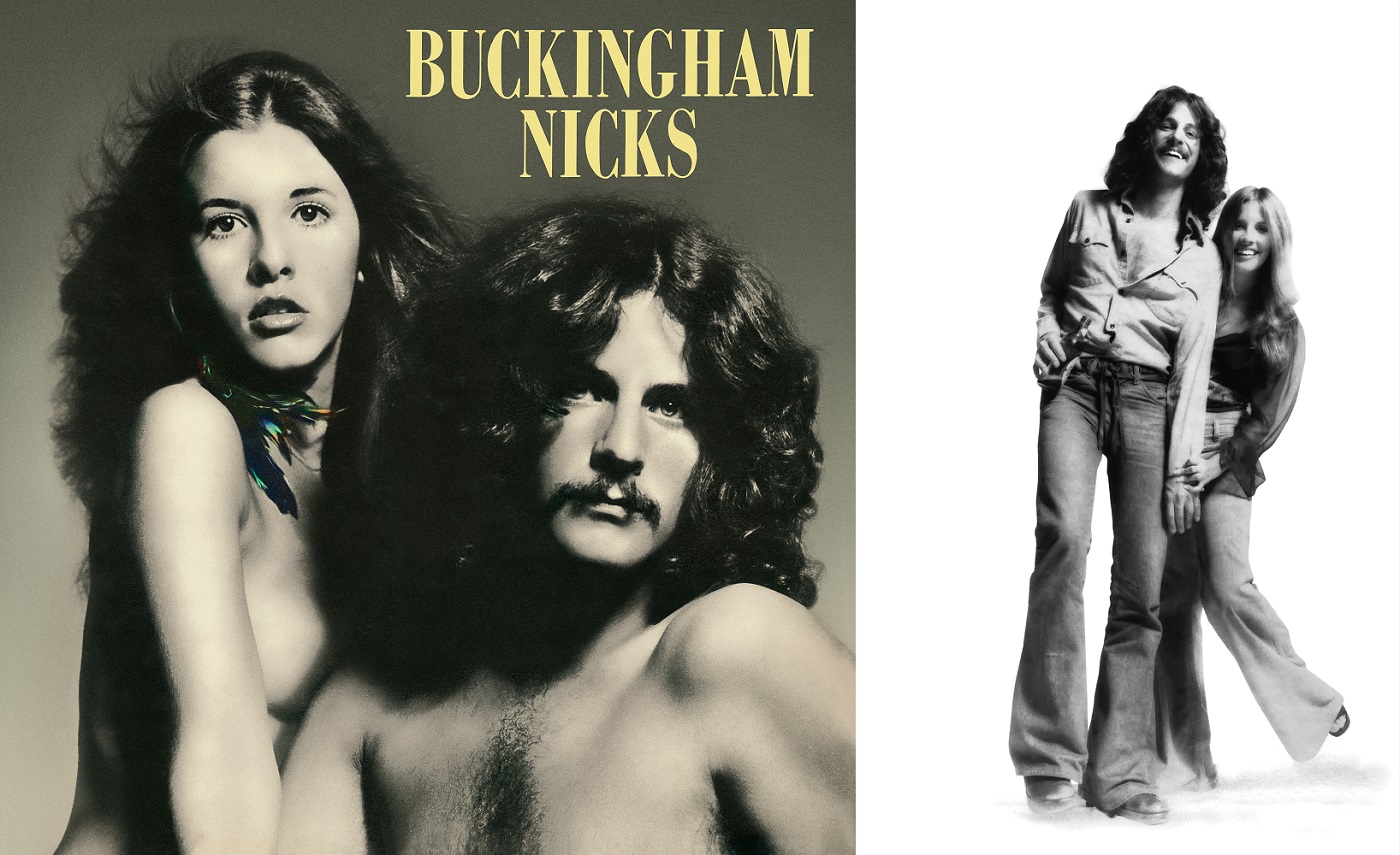
Buckingham stayed home practicing guitar for hours a day while Nicks went out and earned the money that kept them both alive. She was the one scrubbing floors so he could play. That was the arrangement, and it was wearing her down, not just physically but in her sense of whether any of it would ever amount to anything.
That is the state of mind she was in when she wrote “Landslide.” People often describe it as a gentle song about change, but underneath it is a real and specific fear, the fear of a woman who has bet years of her life on a dream that has so far returned nothing.
She has said she was genuinely asking herself whether she should give up, go back to school, go home to her family, and quit music altogether. The line about being afraid of changing because she had built her life around someone else was not poetry invented for a song. It was the actual question in front of her.
Should she keep pouring herself into Buckingham’s talent and their shared ambition, or walk away before it broke her? She wrote the doubt down instead of acting on it, and that decision, to turn the fear into a song rather than let it end her, is the thing she would do again and again for the rest of her career.
The gamble paid off in the most sudden way. Later that same year, Mick Fleetwood, the drummer and founder of a British band called Fleetwood Mac, heard Buckingham’s guitar playing and wanted to recruit him. Buckingham refused to join unless Nicks came too.
Fleetwood agreed, and this struggling blues band, rebuilt around two unknown Californians, released a self-titled album in 1975 that became an enormous hit. In the space of about a year, Nicks went from cleaning houses to being in one of the biggest bands in America.

Everything they had starved for arrived at once. And then, at the exact moment the success landed, the human foundation underneath the band began to crack.
By early 1976, the group gathered at the Record Plant studio in Sausalito, California, to make the follow-up record. What should have been a victory lap turned into something closer to group therapy conducted at gunpoint. Three couples inside the band were disintegrating simultaneously.
Christine and John McVie, married eight years, were divorcing and had become, in Christine’s words, cold as ice to each other. Mick Fleetwood was privately dealing with the collapse of his own marriage. And Nicks and Buckingham, together for years, were ending their relationship while trapped in the one situation that makes a breakup impossible to process.
They could not walk away from each other. They were contractually and musically bound together, sharing a microphone, playing on each other’s songs, seeing each other every day in a small studio. The normal mercy of distance after heartbreak was denied to all of them.
That specific trap is what makes Rumours the record it is, and it is worth understanding the mechanism rather than just calling it dramatic. Because none of them could say what they needed to say to each other’s faces, they said it in the songs, and then they all had to play on each other’s confessions.
Buckingham later called the tracks “dialogues” rather than “breakup songs” because each was aimed at a specific person standing a few feet away. He was writing to Nicks. She was writing back to him. Christine was writing to John. The album is not a collection of sad songs about love in general.
It is a real argument between real people, captured in real time, with each participant forced to perform the other side’s accusation.

“Dreams” is the clearest case, and the story of its writing shows how Nicks worked. During the Sausalito sessions, she borrowed an empty studio down the hall, a room that belonged to Sly and the Family Stone, who were not there.
She sat on a bed with a keyboard, found a simple drum pattern, turned on a cassette recorder, and wrote the entire song in about ten minutes. It would become the only number one single Fleetwood Mac ever had in the United States. What matters is not just the speed but the choice of tone.
Buckingham’s song about their breakup was “Go Your Own Way,” a fast, sharp, angry goodbye, and it contained a line accusing her of the kind of behavior that ends a relationship, a line that genuinely wounded her because she felt it was untrue. She could have answered anger with anger.
Instead, “Dreams” is calm, almost forgiving, delivered from a kind of sad emotional high ground. She later said the two songs were twins written from opposite temperaments, his hard and direct, hers dreamy and reflective, and that despite the opposite approaches they were both saying the same thing about the same ending. One of them shouted it. The other one grieved it.
There is a single moment that captures the whole strange dignity of these people. After Nicks finished the rough recording of “Dreams,” just her voice and a keyboard on a cassette, she carried it down the hall and handed it to Buckingham, the man she had just broken up with, the man who was angry with her.
He put it on and listened. Then he looked up at her and smiled. He was hurt, and he was furious, and he could still hear that she had written something great, and some part of him still wanted it to succeed.
That smile, offered across the wreckage of their relationship, is Fleetwood Mac in a single gesture. They were coming apart as people and, in the same breath, building something that would outlast all of it.
Not every song survived the process intact, and the one that got cut reveals how high the stakes felt to her. “Silver Springs” was one of the most emotionally exposed things Nicks wrote in this period, another message to Buckingham, carrying the almost threatening promise that the sound of her voice would follow him down through the years and haunt him. It was left off Rumours.
The stated reason was purely technical, that a vinyl record can only hold so many minutes and something had to go, but that logic did nothing to ease the hurt. Nick loved the song and was devastated to see it dropped; she said she believed it had simply disappeared forever for years.
The pain over “Silver Springs” did not fade. It became one of the lasting resentments that, years later, contributed to her decision to leave the band. Even the song they buried kept doing damage.
Her last major statement on the album, “Gold Dust Woman,” widened the lens from the breakup to the thing that was quietly swallowing all of them. She described it as a symbolic portrait of someone in a bad relationship, using a lot of drugs, and trying to survive anyway.
The Rumours sessions were famously fueled by cocaine as much as by heartbreak, and in “Gold Dust Woman” Nicks was looking directly at what that life was doing to the people living it, herself included. It was not about a single fight. It was about a whole way of living that was pulling everyone down at once, and she had the clarity to name it even while she was inside it.
The cost did not stop when the album was finished. Nicks built a major solo career alongside the band, launching it in 1981 with “Bella Donna” and its hit “Edge of Seventeen,” proving she was a powerful artist entirely on her own terms. But the same excess that ran through Rumours followed her for years.

She went through treatment for cocaine addiction, and then developed a dependency on a tranquilizer she was prescribed afterward, a second addiction that cost her much of a decade.
She has said that being in Fleetwood Mac stayed tense to the end, while her solo career felt free by comparison. That was the trap. The friction between the five of them was the engine of the music and the reason the band could barely survive itself. What made the songs great was the same thing that made staying nearly impossible.
And still the songs kept finding new life on their own. In 2020, more than forty years after Nicks wrote it in ten minutes, “Dreams” went viral when a man filmed himself skateboarding down a highway drinking cranberry juice and lip-syncing along.
Within a week its streams jumped enormously, and it re-entered the charts for the first time in three decades. A new generation discovered it, and many of them did not experience it as a breakup album at all.
They took comfort in the opposite reading: that all these painful, chaotic things had happened to real people, and the result was beautiful, and, in the end, everyone came through it.
Mick Fleetwood, watching a stranger’s skateboard video breathe new life into the song, said it could have been any song, but it was theirs, and that the randomness of it delighted him.
That afterlife proves the thing Stevie Nicks understood from the very beginning, back when she was a broke twenty-seven-year-old cleaning houses and writing “Landslide” out of pure uncertainty. Pain is not only something that happens to you.
It is raw material. You can take the exact thing that is breaking you, shape it, give it a melody, and hand it to strangers, and in doing that you turn a private wound into something that comforts people for fifty years.

She did not write her way around the collapse of her band and her love. She wrote her way straight through the center of it, and the trail she left became some of the most treasured music ever recorded.
The relationships ended. The band broke and reformed and broke again. But the songs she made in that brutal, productive year are still here, still sung, still holding up a mirror for anyone going through their own heartbreak. That was always the real power of Stevie Nicks.
When she could not fix what was happening to her, she wrote it down until it became something she could carry, and in the process she made something the rest of us could carry too.




Thank you for this great article! 💎