
From Genesis drummer to global solo icon, Phil Collins built a career across rock, pop, and collaborations
Starting from west London stage schools and early drum kits to Genesis, solo superstardom, major collaborations, family strain, and later health struggles, Phil Collins built a career that moved through progressive rock, pop, soul, and film music without losing its identity
Phil Collins was born Philip David Charles Collins on January 30, 1951, in Chiswick, west London. He grew up in a middle-class home with parents who supported the arts and did not treat performance as a childish distraction.
His father, Greville Collins, worked in insurance. His mother, June Collins, worked in a toy shop and later became involved in running a performing arts school. He was the youngest of three children, and from early on, he showed more than one kind of talent.
Before music took over his life, he was already working as a performer.
As a child, Collins studied at Barbara Speake Stage School and began appearing in stage productions at a time when most future musicians were still only listening to records.
His best-known early acting role was the Artful Dodger in the West End production of Oliver! This mattered because it helped explain something about the adult Phil Collins. He did not arrive on stage as a shy musician who slowly learned how to be seen.
He had already spent years learning timing, discipline, projection, and live performance before audiences.
At the same time, music was becoming central.
He received a toy drum kit at the age of five and, as he got older, a proper drum kit. What followed was not casual practice. Collins was serious very early. He listened closely, copied what he heard, and developed a technique through repetition.
He also studied with teachers such as Lloyd Ryan and Frank King, but much of his growth came from self-teaching and instinct. He has often admitted that he never really became a strong formal reader of notation. He relied on memory, feel, and internal structure. That remained true throughout his career.
His early influences were not limited to one lane. He admired Ringo Starr and the way Starr served songs without overplaying. He also absorbed soul and rhythm-based music from Motown and Stax, which helped shape the groove-oriented side of his playing.
Collins could handle technical material, but he never sounded like a musician trying to impress through complexity alone. He played for movement, feel, and shape.
During his school years, he was already combining music and personal life in ways that would continue throughout adulthood. He attended Chiswick County Grammar School and formed early bands, including one called the Real Thing.

In that world was Andrea Bertorelli, who would later become his first wife and a key part of the early emotional backdrop to his adult songwriting. Even before fame, Collins was moving through performance, band formation, and relationships in overlapping ways.
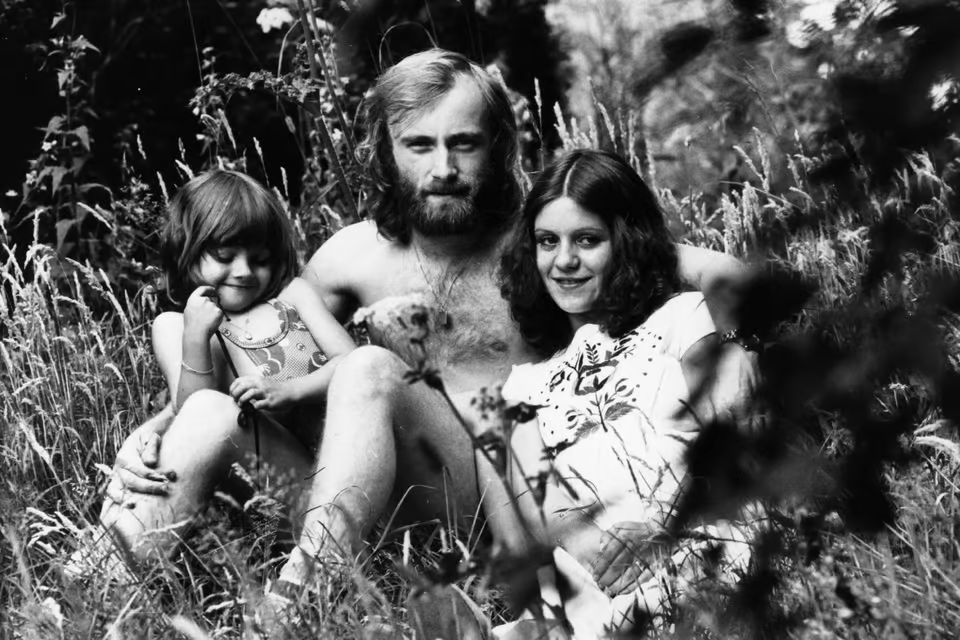
By the late 1960s and early 1970s, his work as a drummer was expanding. He built a reputation as someone adaptable enough to play in multiple settings. He worked in session environments and also became involved with the jazz-rock group Brand X, where he explored a more experimental and technically demanding side of his drumming.
Brand X showed what Collins could do outside of pop structure. He was capable of far more complexity than his later radio image sometimes suggests.
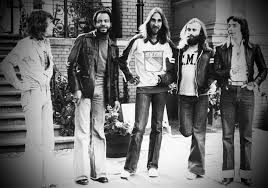
The decisive break came in 1970 when he joined Genesis.

At that point, Genesis was still strongly associated with Peter Gabriel as frontman and with progressive rock as its main identity. Collins entered as a drummer, not as a future star, and that role suited him.
In the early years with Genesis, he was the rhythmic center of a band known for long-form writing, shifting structures, and theatrical presentation. His drumming during the Gabriel era helped stabilize music that could easily have felt over-designed in less capable hands.
When Peter Gabriel left Genesis in 1975, the band faced a serious problem. Replacing a frontman with that much presence was not simple. They auditioned singers, but none of them convinced the group. Eventually, Collins, who had already been singing backing parts and helping with auditions, stepped into the role.
That change transformed both him and the band.
His first Genesis album as lead singer was A Trick of the Tail in 1976. The key point here is that the band did not collapse after Gabriel’s departure. Instead, it evolved.
Collins did not copy Gabriel. He gave Genesis a more direct vocal identity and, over time, helped guide the band toward a broader audience without severing it completely from its earlier character.
This was one of the major structural shifts in British rock of the period. A drummer had become the frontman of a major progressive rock group and helped lead it into a more accessible phase.
Through the late 1970s and into the 1980s, Genesis changed again. Albums like Duke, Abacab, Genesis, and Invisible Touch showed that the band could operate successfully in a more streamlined format.
Collins was central to this transition. He was not the only creative force in the band, but his vocal presence and musical instincts became major drivers of their mainstream success. By the 1980s, Genesis was no longer simply a progressive rock institution. It had become one of the biggest bands in the world.
At the same time, Collins was beginning to build a solo career.
His first solo album, Face Value, arrived in 1981. The record was shaped heavily by the collapse of his first marriage and the emotional fallout that followed. The songs carried anger, isolation, and direct personal tension.
The most famous example is “In the Air Tonight,” which became his breakthrough solo song. Its atmosphere, vocal restraint, and explosive drum entry made it one of the defining recordings of the decade.
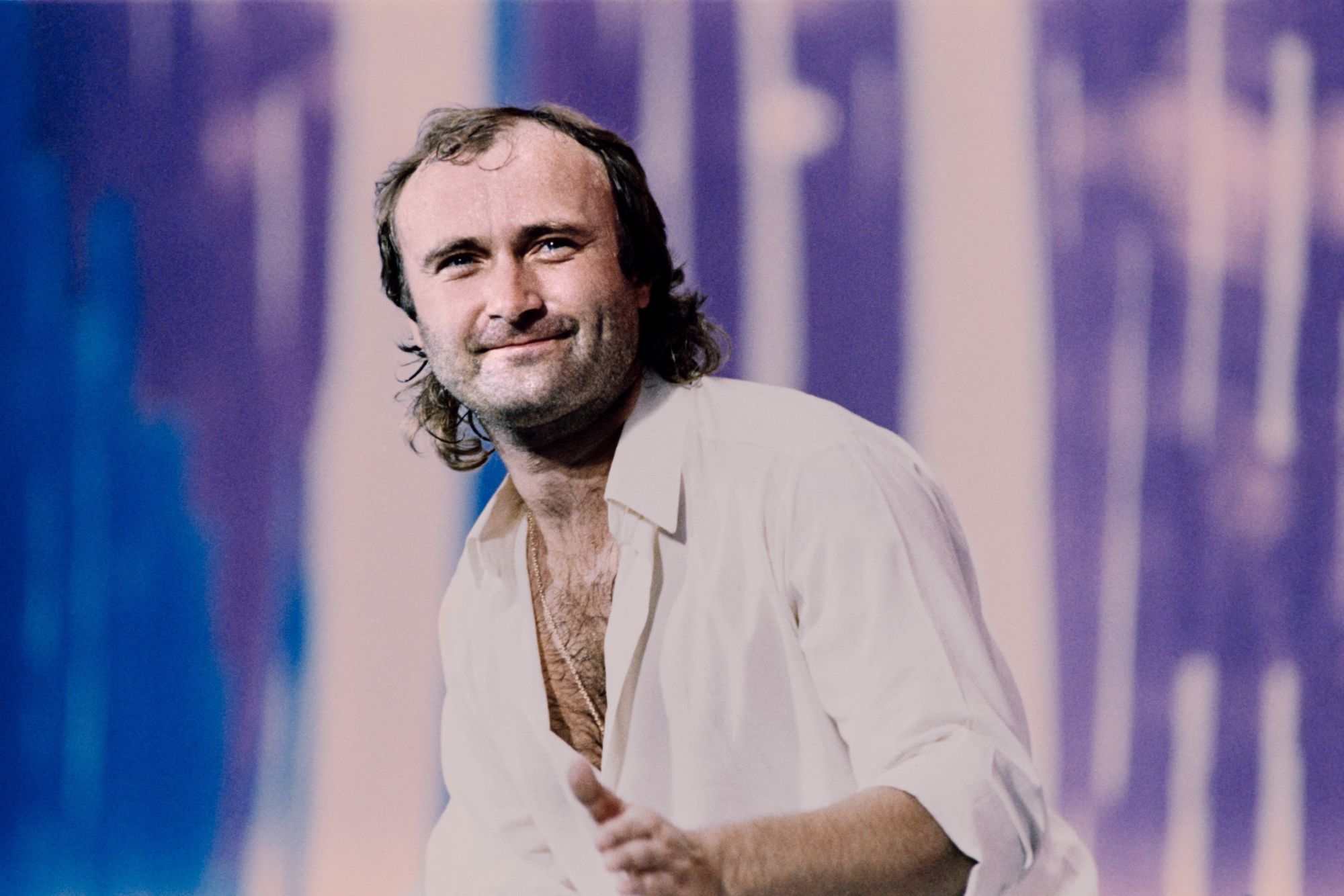
This song is often reduced to its drum fill, but that misses the larger point. “In the Air Tonight” established Collins as a solo artist with a completely different emotional register from Genesis. It was darker, more exposed, and more personal.
He followed with Hello, I Must Be Going! in 1982, continuing the solo momentum, and then No Jacket Required in 1985, which turned him into one of the biggest pop artists in the world.
By this point, he was functioning in multiple careers at once. He was still active in Genesis, still working as a drummer and collaborator, and now also dominating as a solo star.
His major solo hits came in waves. “Against All Odds” showed his control over the pop ballad form. “One More Night” and “Sussudio” expanded his radio dominance.
“Another Day in Paradise” later added social commentary to his mainstream success. Songs like “I Wish It Would Rain Down” showed that even within polished 1980s production, he could still lean into a more classic emotional weight.
What made Collins unusual was not just the number of hits. It was the range of roles he could occupy while producing them. He was a frontman, a drummer, a writer, a producer, and a collaborator at the same time.
That collaboration history is one of the most important parts of his career.
In the 1980s, he became a highly sought-after producer and sideman. He worked with Eric Clapton on Behind the Sun and August, helping shape a more polished phase of Clapton’s sound.
He collaborated with Philip Bailey on “Easy Lover,” one of the biggest and most durable hit duets of the decade. He worked with Frida from ABBA, Chaka Khan, Howard Jones, and Robert Plant.
He contributed drumming to Band Aid’s “Do They Know It’s Christmas?” and appeared in major live events where he moved between support roles and star roles with unusual ease.
This part of Collins’s career is often underestimated because his solo fame became so large. But his ability to serve other artists while maintaining his own voice is part of what made him so great.
By the late 1980s, Journeyman by Eric Clapton, “Easy Lover” with Philip Bailey, and the continuing Genesis machine all showed the same thing. Collins was one of the central working figures in popular music, not only as a singer but as a builder of records.
His personal life, meanwhile, remained unstable in ways that often fed directly into the songs.
He married Jill Tavelman in 1984, with whom he had a daughter, Lily Collins. That marriage also ended. Later came Orianne Cevey, with whom he had two sons, followed by another highly public and financially costly separation. Across these relationships, one pattern remained constant.
Collins has often described himself as obsessive and work-driven. Music repeatedly took priority over domestic balance, and his marriages suffered under that pressure.
He also moved more deeply into film-related work, most famously with Disney’s Tarzan, which gave him another global phase, thanks to songs like “You’ll Be in My Heart.”
That success added another layer to his career. He was no longer just a rock-and-pop figure. He also became part of family film culture, which expanded his audience again.
Then came the physical decline.
Collins’s health problems in later life were serious and limiting. Spinal damage, nerve issues, reduced mobility, and the physical aftereffects of decades of drumming changed what he could do. He eventually retired from drumming and returned only in a very restricted form.
For an artist whose body had been central to his music from childhood, losing ease of movement was not just a medical problem. It changed the terms of his identity.
Even so, he returned for later Genesis activity and major live appearances, though with visible limitations. By the time he reached his seventies, the image had shifted sharply from the hyper-productive multi-role figure of the 1980s. The work remained. The body had changed.
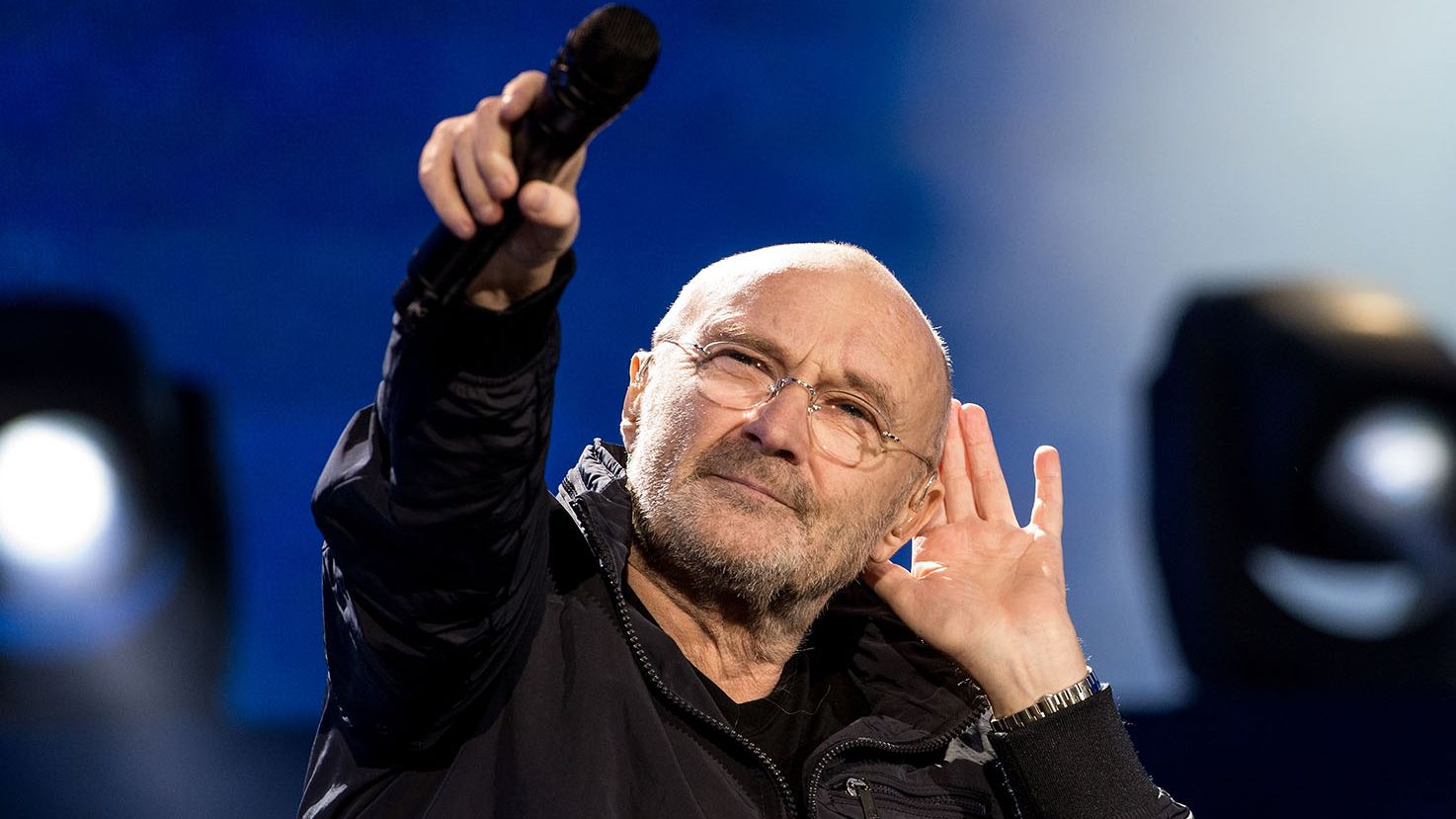
Phil Collins’s legacy is larger than the cliché version of it.
He was first an exceptional drummer with deep musical instincts. He became the frontman of one of Britain’s most amazing bands without damaging the band’s identity.
He then built a solo career large enough to overshadow his band work in public memory. He collaborated across genres and generations. He produced hit records for others. He wrote songs from emotional collapse, public success, guilt, anger, and vulnerability without losing broad appeal.
Very few musicians have been that successful in so many different roles at once.
Phil Collins’s career only makes sense when the full timeline stays visible. Child actor. Self-taught drummer. Genesis sideman. Genesis frontman. Solo star. Producer. Collaborator. Film songwriter. Aging musician working against his own body.
All of that is one life.