
From a restless schoolboy in England to a global MTV icon, Billy Idol turned rebellion into a lifelong identity.
Billy Idol’s story is not just about music.
It is about identity.
He was born William Michael Albert Broad on November 30, 1955, in Stanmore, Middlesex, England, into a stable, middle-class family. His father, William Alfred Broad, worked as a traveling salesman, and his mother, Joan O’Sullivan, came from Irish roots. Their home followed a structure. Church on Sundays. Discipline. A clear sense of what life should look like.

But that clarity never quite fit him.
When he was just a toddler, his family moved to the United States, settling in Long Island, New York. For a young boy, this was his first taste of a different world. American culture, energy, and openness left an impression on him. He wore coonskin caps, absorbed television culture, and lived in that moment of post-war optimism.
Then, just as suddenly, it ended.
The family returned to England when he was still a child.
Back in Britain, he was no longer fully one thing or the other. Not fully American. Not fully British in the way others expected.
He stood out.
That feeling of being slightly out of place followed him through school. He attended Ravensbourne School for Boys and later Worthing High School. Academically, he was capable. He passed his exams. But he was bored.
Not rebellious yet.
Just uninterested.
One teacher wrote a comment that would later become famous.
“William is idle.”
That line stuck.
It was not meant to define him. But it did.
He turned it into a name.
Billy Idol.
Just taken from real life and reshaped into something sharper.
At home, things became more complicated as he grew older. His father did not approve of his interest in music, long hair, and the direction he seemed to be heading. This created distance between them. For a period during his teenage years, they barely spoke.

That silence mattered.
It pushed him further toward finding his own identity.
Music became the outlet.
At first, it was simple curiosity. He tried drums as a child. Later, he picked up the guitar, teaching himself by listening to records. He admired artists like John Lennon and Paul McCartney.
Then came the wider influence of the time. The Rolling Stones. David Bowie. The raw shift in youth culture was happening across the UK.
By the mid-1970s, everything changed.
Punk arrived.
It was direct, loud, and unapologetic. For someone like Billy Idol, it was a space where not fitting in became an advantage.
He dropped out of university at Sussex and stepped fully into that world.
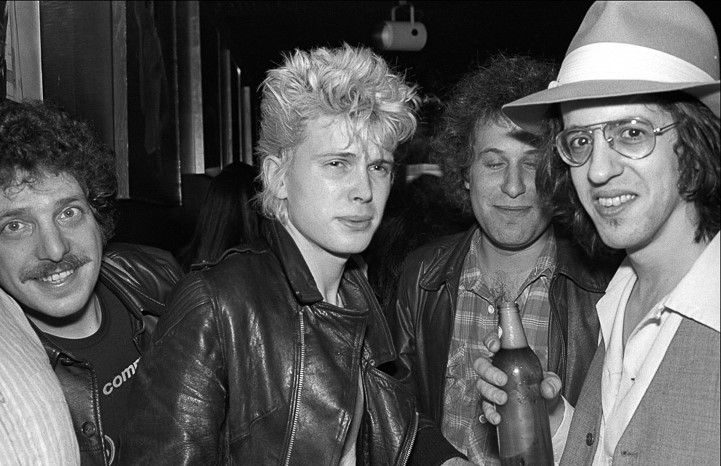
His first serious move into music came when he joined Chelsea as a guitarist. The band was part of the early London punk scene, but its time there was short. He wanted more than just being a background player.

Soon after, he co-founded Generation X.
This was the turning point.
With Generation X, Billy Idol moved from participant to frontman. The band stood slightly apart from other punk groups. While bands like the Sex Pistols focused on aggression and chaos, Generation X blended punk energy with melody and structure.
Songs like Your Generation carried attitude but were also musically balanced.
The band released multiple albums and gained attention, but internal tensions grew. Creative differences, personal ambitions, and the usual pressures of band life pulled them apart.

By 1981, Generation X had ended.
At that moment, Billy Idol made a decision that changed everything.
He moved to New York.
Leaving the UK punk scene behind, he stepped into a different environment. The American music scene was shifting. MTV was emerging. Visual identity was becoming as important as sound.
Billy Idol understood this instinctively.
He partnered with guitarist Steve Stevens, and together they created a sound that blended punk attitude with hard rock, pop structure, and visual impact.

His 1982 solo debut, Billy Idol, introduced this new version of him to the world.
Songs like “White Wedding” and “Hot in the City” were not just popular. They were memorable. The hooks were strong. The energy was controlled. The attitude was clear.
Then MTV amplified everything.
Billy Idol was built for that era.
The bleached spiked hair. The leather outfits. The curled lip. The direct stare into the camera. He was not just performing songs. He was performing identity.
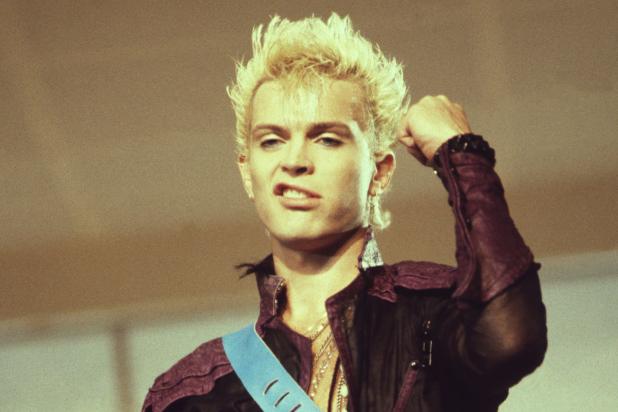
His next album, Rebel Yell, released in 1983, pushed him into global stardom.
Tracks like Rebel Yell, Eyes Without a Face, and Flesh for Fantasy showed range. He could deliver aggressive rock, but also slower, darker, more reflective material.
By the mid-1980s, Billy Idol had moved far beyond his punk beginnings. He had become one of the defining figures of the MTV generation.
But success brought its own problems.
The lifestyle around fame became intense. Constant touring. Media attention. Expectations. And like many artists of that time, he fell into heavy drug use.
It was built over time.
By the late 1980s and early 1990s, the cracks were visible.
Then came the breaking point.
A serious motorcycle accident in 1990 left him badly injured. Around the same period, he suffered from a drug overdose. These were not small incidents. They stopped everything.
His career slowed dramatically.
The industry moved on quickly, as it always does.
For a while, it looked like Billy Idol might become just another figure from a past era.
But that did not happen.
He stepped back, recovered, and began rebuilding.
Not in the same way as before.
More aware.
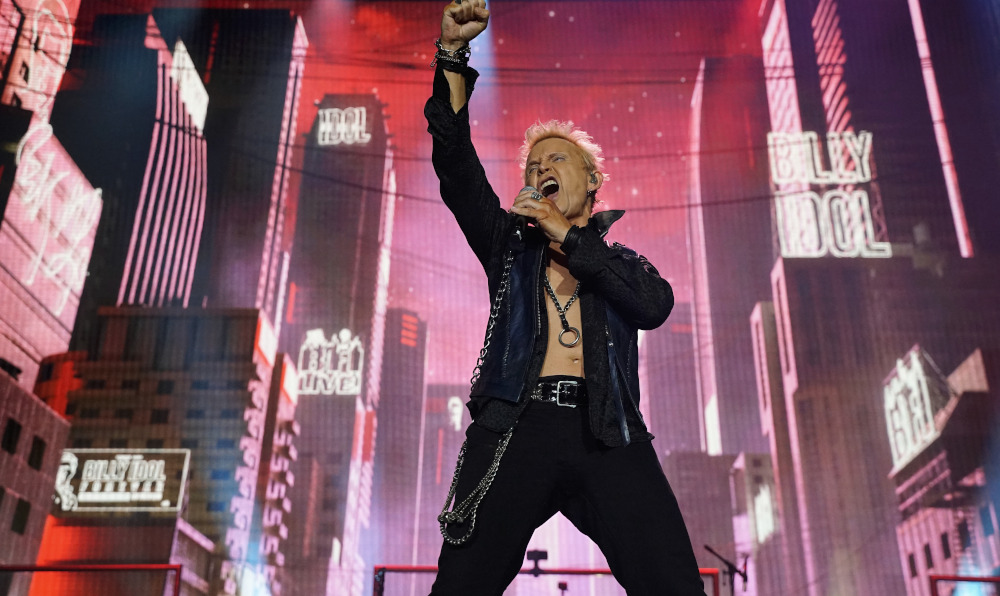
He experimented with new directions, releasing Cyberpunk in 1993. The album explored electronic sounds and digital themes. It was not widely embraced at the time, but it proved he was still willing to take risks.
Over the following years, he focused on live performances, reconnecting with loyal audiences. He also reflected more openly on his life, writing his autobiography Dancing with Myself.
In it, he did not hide from his past.
The mistakes. The excess. The near collapse.
All of it was part of the story.
And that story is what defines him.
Not just the image.
Not just the hits.
But the full arc.
From a structured childhood to rebellion.
From punk outsider to global icon.
From excess to recovery.
Billy Idol did not follow a straight path.
He moved between worlds.
Punk and pop.
Underground and mainstream.
Chaos and control.
Even in later years, he continued to perform, record, and stay connected to new audiences. His influence can be seen in younger artists who mix attitude with accessibility.

Because that is what he did first.
He made rebellion something that could be seen, heard, and remembered.
Not as a trend.
As a personality.
Billy Idol did not invent rock.
He did not invent punk.
But he understood something many did not.
Music is not just about sound.
It is about presence.
And once you create that presence, it stays.
Even when everything else changes.