
From Minnesota roots to folk protest, electric revolution, personal upheaval, and decades of constant change, Bob Dylan reshaped songwriting and never stayed in one place for long
Bob Dylan was born Robert Allen Zimmerman on May 24, 1941, in Duluth, Minnesota, and grew up in the nearby mining town of Hibbing. His family was part of a close Jewish community, and his early life was shaped by a mix of small-town routine and constant exposure to music through the radio.
He listened to country, blues, and early rock and roll, absorbing artists like Hank Williams and Little Richard. One of the defining moments of his youth came when he saw Buddy Holly perform just days before Holly’s death.

That experience stayed with him and reinforced his interest in music as something immediate and alive rather than distant.
As a teenager, Dylan formed local bands and played early rock and roll, but his direction changed when he discovered folk music. Artists like Woody Guthrie became central to his thinking. Guthrie’s songs were not just about melody. They carried stories, politics, and identity.
Dylan saw in that approach a way to combine music with something more serious. In 1959, he enrolled at the University of Minnesota but spent more time in the Dinkytown folk scene than in classrooms. By 1960, he had dropped out and fully committed to music.
Around this time, he adopted the name Bob Dylan, inspired in part by poet Dylan Thomas, though he later offered different explanations for the choice. In 1961, he moved to New York City with a clear purpose.
He wanted to enter the Greenwich Village folk scene and visit Woody Guthrie, who was seriously ill in a hospital. That visit became part of Dylan’s origin story. He was not just chasing a career. He was connecting himself directly to the tradition he wanted to carry forward.
In New York, Dylan began performing in clubs and building a reputation. His early image was simple. Acoustic guitar, harmonica, and a voice that did not fit traditional standards but carried depth.
His first album, released in 1962 and titled Bob Dylan, consisted mostly of folk and blues covers. It did not make him famous, but it established him within the scene.
The breakthrough came in 1963 with The Freewheelin’ Bob Dylan. This album introduced his songwriting to a wider audience. Songs like “Blowin’ in the Wind” and “A Hard Rain’s A-Gonna Fall” placed him at the center of a new wave of politically aware folk music.
“Blowin’ in the Wind” became especially important after Peter, Paul, and Mary recorded it, turning it into a major hit and a civil rights anthem. Dylan was now seen as a voice of his generation, whether he wanted that role or not.
In 1964, The Times They Are a-Changin’ strengthened that image. The songs addressed social change, inequality, and generational tension. Dylan performed at major events linked to the civil rights movement, including the March on Washington in 1963.
Songs like “Only a Pawn in Their Game” and “The Lonesome Death of Hattie Carroll” dealt directly with racism and injustice. During this period, he was closely associated with activism and protest, and many people saw him as a spokesperson for a wider cultural movement.
At the same time, his personal relationships were influencing both his life and his work. In New York, he was involved with Suze Rotolo, who appeared with him on the cover of The Freewheelin’ Bob Dylan. Their relationship placed him directly within the political and artistic circles of Greenwich Village.
He also had a close and highly visible relationship with Joan Baez, who was already an established folk singer. Baez helped bring Dylan to larger audiences, and they performed together frequently. Their relationship later ended, but it played an important role in his early rise.
By late 1963, Dylan had already begun to resist being defined only as a protest singer. His speech at an awards event, in which he expressed controversial views, showed that he was uncomfortable with being placed in a fixed political role. He wanted freedom to write beyond expectations.
That shift became clear in 1965. Dylan released Bringing It All Back Home, which introduced electric instruments into his music. This was followed by Highway 61 Revisited later the same year.
The move to electric sound reached a breaking point at the Newport Folk Festival in 1965, where his performance with a band was met with boos from parts of the audience. Folk purists felt he had abandoned the tradition. Dylan saw it differently. He was exploring and expanding.
“Like a Rolling Stone,” released in 1965, became one of the most important songs of his career. It served as the opening track and lead single for his 1965 studio album, Highway 61 Revisited.
It broke the usual structure of radio singles with its length and its lyrical depth. The song combined rock energy with language that drew from poetry, storytelling, and sharp observation.
Around this time, Dylan’s writing became more complex, filled with surreal imagery and layered meaning.
In 1966, Blonde on Blonde completed what many consider his most important trilogy of albums from this period. It showed how far he had moved from his early acoustic beginnings. His music now blended rock, blues, and poetic language in a way that had not been done before at that scale.
At the same time, his personal life was changing. In November 1965, he married Sara Lownds in a private ceremony. They had four children together, and Dylan adopted Sara’s daughter from a previous marriage. During this period, he was also under intense pressure from touring, public expectations, and constant attention.

In 1966, he had a motorcycle accident near Woodstock. The exact details of the injuries remain unclear, but the effect was real. He withdrew from public life and stopped touring.
This break lasted for about two years and became one of the most important pauses in his career. During this time, he recorded music with members of The Band in informal sessions that would later be known as The Basement Tapes. The recordings showed a shift toward a more relaxed, roots-based sound.
When he returned, his music continued to change. In 1969, Nashville Skyline introduced a country influence and a softer vocal style. This period showed that Dylan was not tied to one genre. He moved where his interest took him.
The 1970s brought another major phase. In 1975, Blood on the Tracks was released, widely seen as one of his most personal albums. It reflected the emotional tension stemming from the breakdown of his marriage to Sara Lownds, which ended in divorce in 1977.
Around the same time, he organized the Rolling Thunder Revue, a tour that combined music, performance, and a rotating cast of collaborators.
In 1976, the song “Hurricane” was released, telling the story of boxer Rubin Carter and addressing issues of injustice. Even when Dylan moved away from being labeled a protest singer, he continued to engage with social themes when it suited him.
In 1979, Dylan entered a new phase with his Christian conversion. Albums like Slow Train Coming reflected this shift, focusing on spiritual themes. This period divided his audience. Some embraced it, while others felt disconnected from the change. As in earlier moments of his career, Dylan did not adjust his direction to meet expectations.

Throughout the 1980s, his output became less consistent in critical reception, though albums like Infidels in 1983 showed strong songwriting and collaboration. He continued to tour and record, maintaining visibility even when his work was debated.
His personal life also continued to evolve. In 1986, he married Carolyn Dennis, a backup singer, and they had a daughter together. This marriage remained largely private and was not widely known until years later.
They divorced in 1992. Dylan’s approach to family life remained guarded. He kept his private world separate from his public image as much as possible.
In 1988, he began what became known as the Never-Ending Tour. This was not a single tour but a continuous cycle of live performances that extended across decades. It became one of the defining features of his later career.
When many artists slow down, Dylan continued to perform regularly, treating the stage as an ongoing part of his work rather than a separate event.
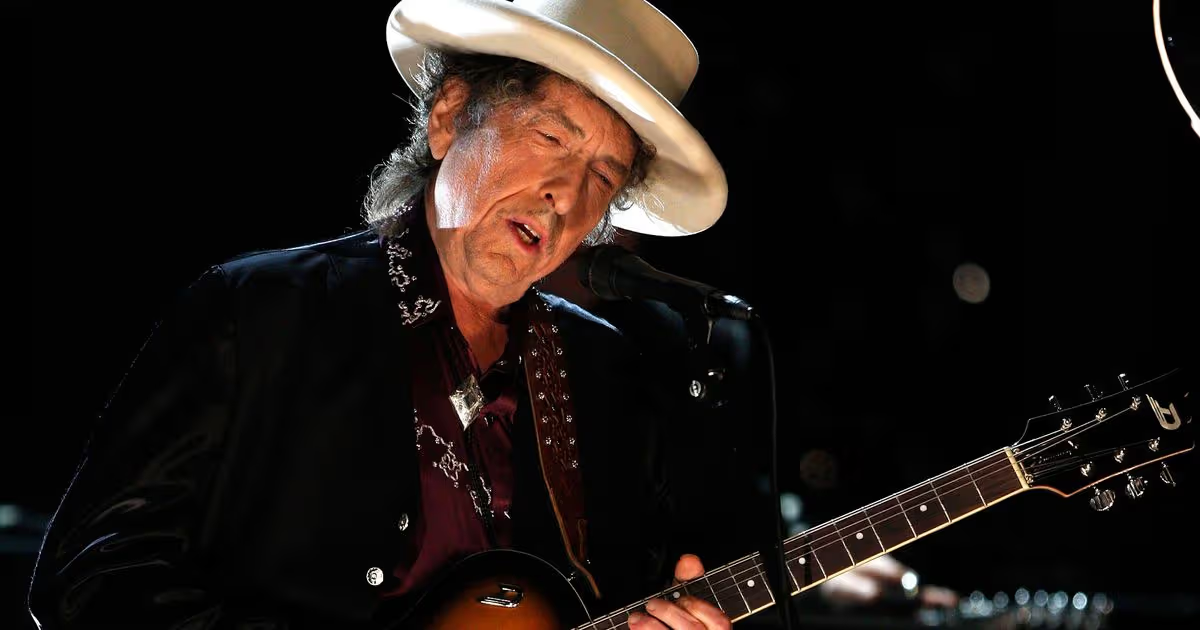
The late 1990s marked a strong return in terms of critical recognition. Time Out of Mind, released in 1997, won the Grammy Award for Album of the Year. It presented a darker, reflective tone, addressing themes of age, mortality, and distance. This album reestablished Dylan as a major creative force in a new era.
In 2000, he won an Academy Award for the song “Things Have Changed,” written for the film Wonder Boys. This added another dimension to his achievements. By this point, his career had spanned multiple decades, and he continued to earn new forms of recognition.
In 2008, he received a special citation from the Pulitzer Prize for his impact on music and culture. In 2012, he was awarded the Presidential Medal of Freedom. In 2016, he received the Nobel Prize in Literature for his contributions to songwriting as a form of poetic expression.
This recognition placed him in a category beyond just a musician, acknowledging the literary dimension of his work.
His later albums continued to show variation. He recorded standards albums between 2015 and 2017, interpreting songs associated with earlier American traditions. In 2020, he released Rough and Rowdy Ways, which was widely praised and showed that even late in his career, he remained capable of producing strong, relevant work.
Across his life, Dylan’s relationships and personal experiences remained closely tied to his music. Early figures like Echo Helstrom influenced songs such as “Girl from the North Country.” Suze Rotolo and Joan Baez shaped his early years in New York.
His marriage to Sara Lownds influenced major parts of his 1970s work. Later relationships and family life continued to exist mostly outside public detail, but they remained part of the emotional background to his writing.
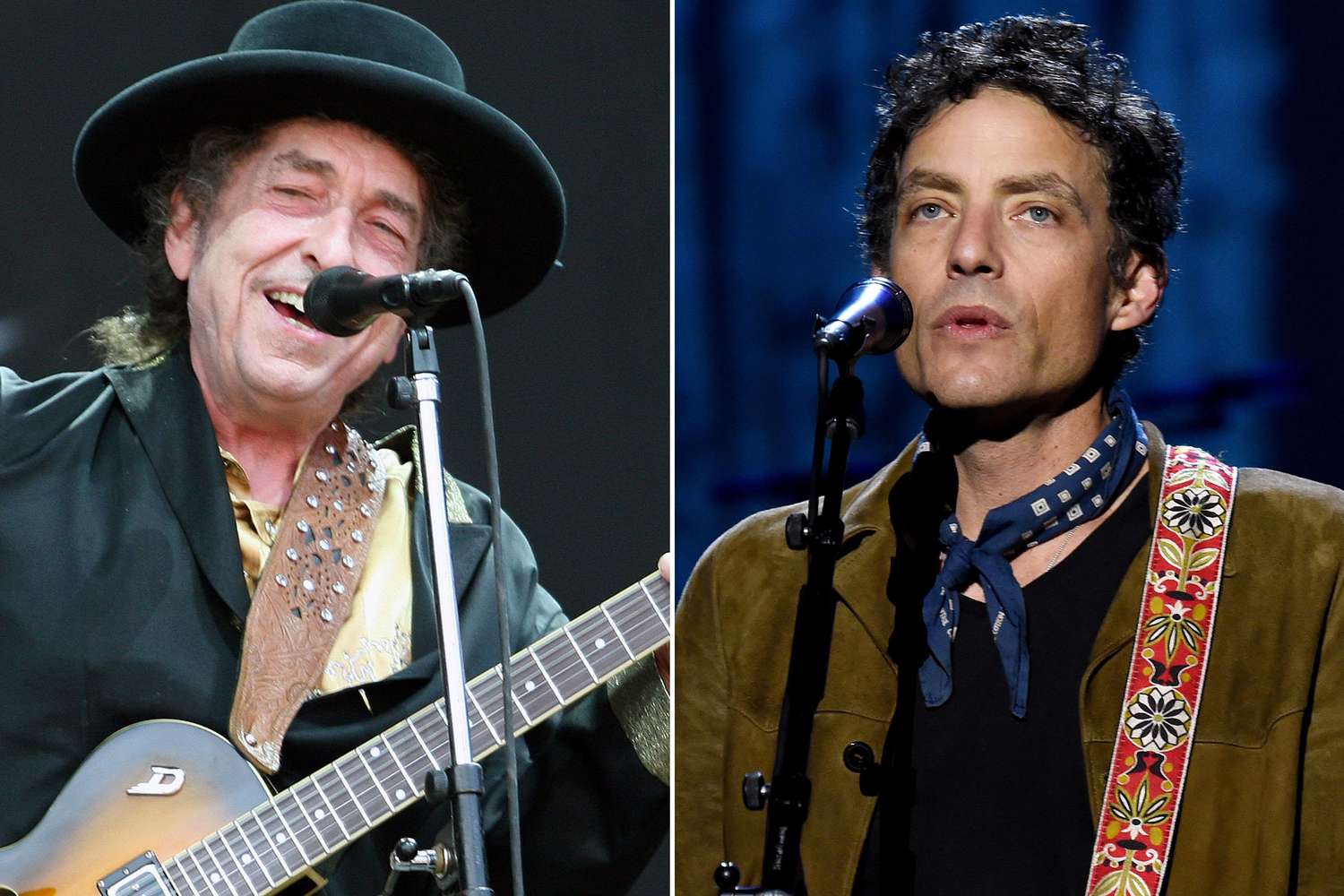
He had six children, including Jakob Dylan, who became a musician in his own right with the band The Wallflowers. Despite his public visibility, Dylan maintained strong boundaries around his family, keeping them away from constant media attention.
Dylan’s influence on music is difficult to measure because it extends in multiple directions. He changed how lyrics function in popular music, introducing complexity, narrative depth, and poetic language into rock and folk.
He broke expectations about genre by moving from acoustic folk to electric rock, then to country, gospel, and beyond. He influenced artists across generations, including The Beatles, who expanded their own lyrical approach after encountering his work.
Bob Dylan’s career is defined by movement. He did not remain in one role long enough to be fully contained by it. Each phase brought new sounds, new writing styles, and new public reactions. Some changes were welcomed, others resisted, but he did not return to earlier versions of himself simply to satisfy expectations.
From a young musician in Minnesota to a figure recognized with a Nobel Prize, his path has been long, uneven, and constantly changing. That continuous change is not a side detail. It is the core of his work.