
The story of a singer who became one of heavy metal’s most powerful voices while living many lives beyond music.
Bruce Dickinson is best known as the powerful voice behind Iron Maiden, one of the most influential heavy metal bands in the world. But his story is larger than music alone.
Over the years, he has been a singer, songwriter, airline captain, author, entrepreneur, and public speaker. His life shows how curiosity and discipline can push a person far beyond a single path.
Paul Bruce Dickinson was born on August 7, 1958, in Worksop, Nottinghamshire, England. His parents were very young when he was born. His father worked as a mechanic in the British Army and later sold used cars.
His mother worked in shops and factories. Because his parents were still building their lives, Bruce spent much of his early childhood with his grandparents in a mining community.
Life there was simple and shaped by working-class routines. His grandfather worked in a coal mine, and his grandmother ran the home. Those early years left a deep impression on him and later inspired the autobiographical song Born in ‘58.
Bruce grew up in a family that did not have much money, but they valued determination and independence. As a child, he often moved between schools because his parents relocated for work. These frequent moves made him feel like an outsider at times, and he learned early how to rely on himself.
When Bruce was about thirteen, his parents sent him to Oundle School, a well-known public school in England. The transition was not easy. He experienced bullying and isolation, which forced him to become mentally tougher. Looking back, he often says that these years helped build his strong sense of self.

At school, he also discovered new interests. He joined the cadet force and helped start a wargames society. Military history and strategy fascinated him, and those interests would later appear in many of Iron Maiden’s songs.
Music entered his life slowly. As a young boy, he first heard The Beatles’ songs, sparking his curiosity. As a teenager, he became more interested in the heavier sounds of the 1970s rock scene.
He briefly tried learning guitar but did not enjoy the physical discomfort of playing it. Instead, he discovered that his real strength was singing and performing. His voice was naturally powerful and expressive, and he quickly found himself drawn to the role of frontman in small school bands.
After finishing school, Bruce briefly attended Queen Mary College in London, where he studied history. But his attention slowly shifted away from academic life and toward music. London at that time was alive with new rock and metal bands, and Bruce wanted to be part of that world.
His first major step into professional music came when he joined the band Samson in the late 1970s. During this period, he used the stage name “Bruce Bruce.” Samson was part of the growing New Wave of British Heavy Metal movement, a scene that would soon produce some of the biggest names in metal.
With Samson, Bruce developed the operatic vocal style that later became his trademark. His voice was powerful, dramatic, and capable of reaching very high notes. Audiences quickly noticed his stage presence as well. He was energetic, theatrical, and confident in front of crowds.
Around the same time, another band from the same scene was gaining attention. That band was Iron Maiden. By 1981, the group was looking for a new singer to replace their original vocalist.
Bruce Dickinson had already impressed people in the metal community with his performances in Samson. After discussions with Maiden’s management, he was invited to audition. The audition went well, and on September 26, 1981, he officially joined the band.

His first live show with Iron Maiden took place in Bologna, Italy, only a month later. The timing was intense. He had little time to prepare before stepping onto large stages with the group.
But the change proved transformative for both sides.
Bruce Dickinson’s first album with the band was The Number of the Beast in 1982. The record became one of the most important heavy metal albums ever released. Songs such as “Run to the Hills” and “The Number of the Beast” helped bring Iron Maiden global fame.
His powerful voice expanded the band’s musical possibilities. With Dickinson singing, Iron Maiden began writing more melodic and complex songs.
The band followed this breakthrough with a series of highly successful albums, including Piece of Mind, Powerslave, and Seventh Son of a Seventh Son. During this era, they became one of the defining bands of heavy metal.

Bruce was not just a singer. He also contributed ideas, lyrics, and themes to the band’s music. Many Iron Maiden songs explore history, mythology, literature, and war. These subjects reflected Bruce’s personal interests in history and storytelling.
Despite the success, the life of constant touring and recording eventually became exhausting. By the early 1990s, Bruce felt creatively restricted and wanted to explore different musical directions.
In 1993, he left Iron Maiden to focus on his solo career.
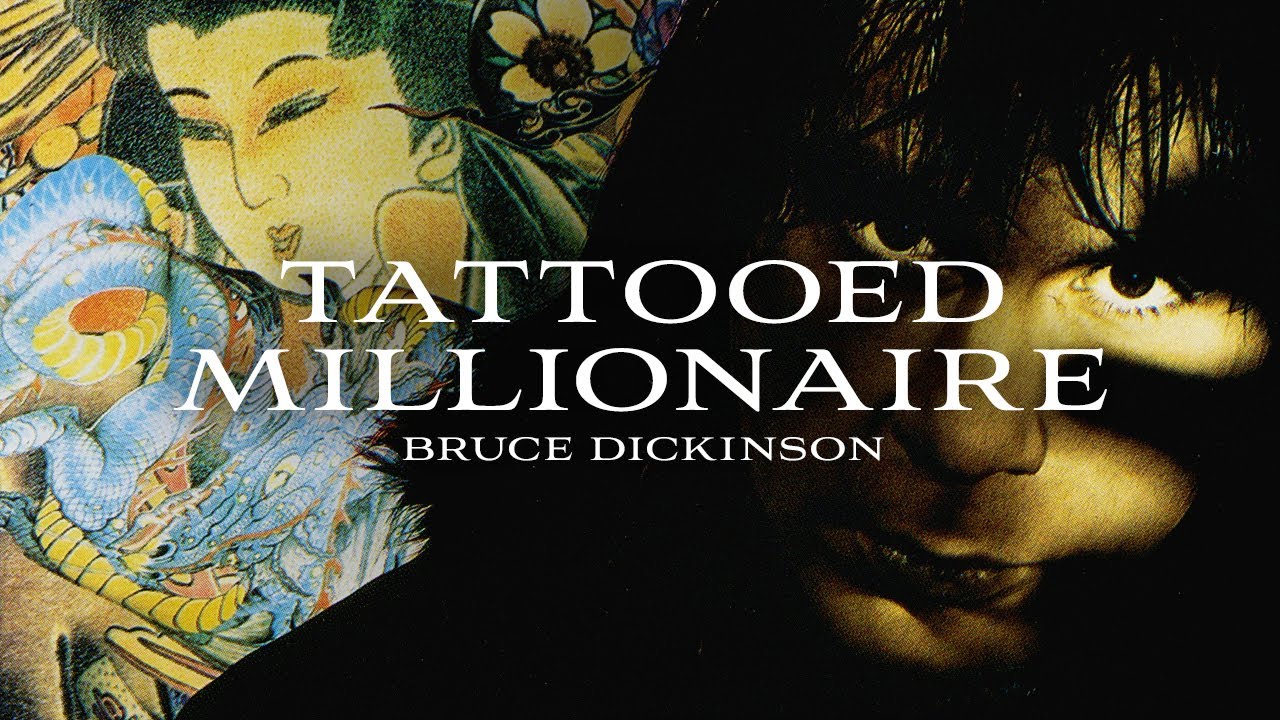
His first solo album, Tattooed Millionaire, had already been released in 1990 while he was still in the band. It leaned toward a more straightforward hard rock style and produced several successful singles.
After leaving Iron Maiden, he experimented with a wider range of sounds. Albums like Balls to Picasso included the well-known song Tears of the Dragon, which became one of his most recognizable solo tracks.
Later albums, such as Accident of Birth and The Chemical Wedding, are often considered the strongest work of his solo career. These records returned to epic, heavy-metal themes and showed his continued growth as a songwriter.
During this time, Iron Maiden continued with another singer, but many fans felt something important was missing.
In 1999, Bruce Dickinson returned to the band along with guitarist Adrian Smith. Their reunion helped launch a new era for the group, beginning with the album Brave New World.
Since then, Iron Maiden has remained one of the most successful touring bands in heavy metal. Their concerts continue to attract large audiences around the world.
What makes Bruce Dickinson unusual among rock singers is the wide range of interests he has pursued outside music.
He trained as a commercial airline pilot and flew passenger aircraft for the charter airline Astraeus. At one point, he even piloted the band’s own touring aircraft during Iron Maiden world tours.
In addition to aviation, he has written novels and an autobiography and delivered public lectures on creativity, leadership, and business.
These activities reflect a restless and curious personality. Dickinson has often said he does not like being limited to a single role.
Friends and journalists frequently describe him as intelligent, articulate, and energetic. On stage, he appears dramatic and powerful, earning the nickname “the Air Raid Siren.” Off stage, he is often thoughtful and analytical, speaking comfortably about literature, history, and entrepreneurship.
His personal life has included several marriages and three children. In recent years, he has continued to tour, record, and explore new projects while maintaining a relatively private life away from celebrity culture.
Across decades of music, Bruce Dickinson has built a reputation as one of heavy metal’s greatest vocalists. His voice, stage presence, and storytelling helped shape the sound and identity of Iron Maiden.
But his legacy also lies in the example he sets. He shows that creativity need not be limited to a single field.
A person can be a singer, a pilot, a writer, and a thinker at the same time.
And in Bruce Dickinson’s case, all those paths seem to come from the same place. A lifelong curiosity about the world and the courage to keep exploring it.