
They called themselves Rammstein, named after the 1988 Ramstein air show disaster, where planes crashed, killing dozens.
The first time I got introduced to Rammstein was when I watched David Lynch’s movie “The Lost Highway” and listened to its soundtrack.
I really love their riffs and raw energy with a mix of techno and psychedelic keyboards.
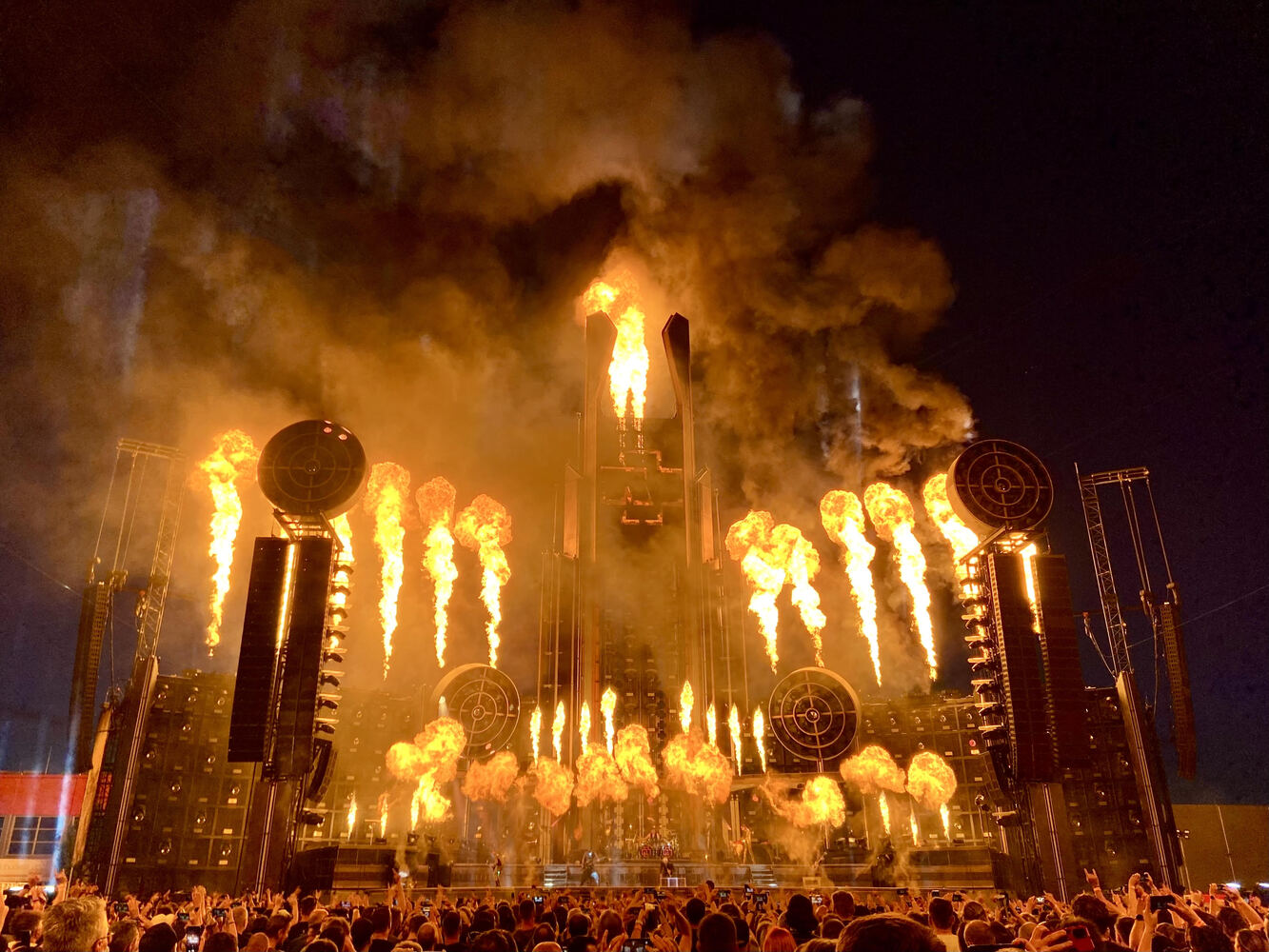
Rammstein doesn’t just play music. They create spectacle. Fire shoots from the stage. Explosions shake the venue. The lead singer wears flamethrowers mounted on his arms. Everything is synchronized with precision.
For nearly 30 years, this German band has built one of the most recognizable rock brands. Not through radio hits or mainstream appeal, but through industrial aesthetics, controversial imagery, and a level of precision that feels almost militaristic.
This is the story of how six guys from East Germany turned fire and controversy into cultural iconography.
Berlin, 1994: The Beginning
Rammstein was formed in Berlin in 1994, right after German reunification. All six members grew up in socialist East Germany. They experienced the Berlin Wall. They watched their entire world change overnight.
Lead singer Till Lindemann had been a basket weaver and drummer. Guitarist Richard Kruspe had escaped to West Berlin before reunification, playing in punk bands. The others came from East German acts like Feeling B and First Arsch.
When they came together, they had one goal.
Create something uniquely German.
Not a copy of American or British bands or artists.
Make music that sounds like where they came from.
“We found the style by knowing exactly what we didn’t want,” Lorenz said. “And we just didn’t want to do American funky music.”
They called themselves Rammstein, named after the 1988 Ramstein air show disaster, where planes crashed, killing dozens. The extra “m” in their name was supposedly a mistake. But it stuck.
Their sound combined heavy metal guitars with electronic keyboards and industrial beats. Rigid rhythms. Harsh vocals. Mechanical precision. All sung in German, using the language’s natural flow as an instrument.
The Fire Starts
From their very first shows, Rammstein used pyrotechnics. Not just a few sparks. Massive fire effects became their signature.
After a 1996 accident in which burning stage decorations collapsed, they hired professionals. Till Lindemann even became a licensed pyrotechnician. He’s suffered multiple burns on his ears, head, and arms from performing engulfed in flames.
Every show became a theater. Lindemann would wear costumes for each song. A blood-soaked chef for “Mein Teil” (a song about a real German cannibal case). A sailor for “Reise, Reise.” Military uniforms. Leather. Diapers (yes, really, they once descended from a giant uterus wearing them).
The rest of the band moved in perfect synchronization and rigid formations. Firing-squad poses. Every motion is calculated and rehearsed. German precision applied to rock-and-roll chaos.
Industrial Aesthetics: The Look
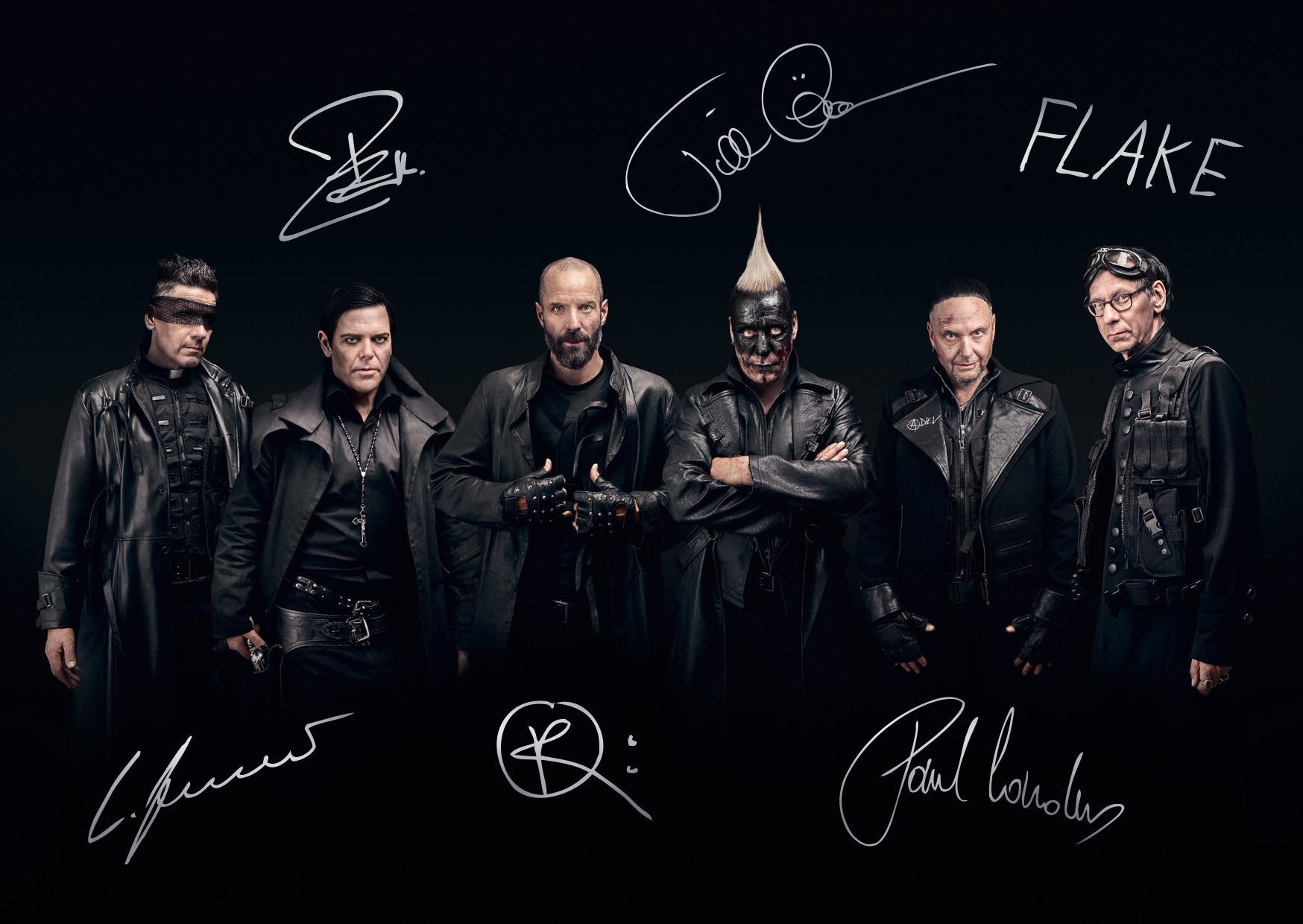
Their music videos and album covers use minimalist but powerful symbols. A single unlit match on an album cover. Band members in gas masks. Black and white photography. Clean, stark typography.
Everything feels intentional. Controlled. Designed.
This extends to their stage design. Two-level stages with hydraulic lifts. Massive industrial fans. Collapsible towers with the band’s logo lit up like factory lights. A long catwalk connects the main stage to a smaller platform in the middle of the audience.
Behind them, flames explode. But the band never breaks formation. They play with robotic precision even as fire rages around them.
The contrast is what makes it powerful. Order and chaos. Control and destruction.
Till Lindemann’s vocals emphasize every hard consonant; he makes German sound aggressive and assertive. Even if you don’t understand the words, you feel the impact.
The music is built on repetitive, machine-like rhythms. No syncopation. No groove. Just relentless forward motion like a factory assembly line or marching soldiers.
Yet beneath this harsh exterior lie catchy melodies. Pop song structures. Hooks you can’t forget. They blend the “exotic” harshness of German industrial metal with proven international rock formulas.
Controversy as Strategy: Rammstein courts controversy. Always has.
Their live shows feature simulated sex acts. In 1999, Lindemann and Lorenz were arrested in Massachusetts for public indecency after performing with a liquid shooting dildo during “Bück dich.” They spent a night in jail and paid a $25 fine.
Their 2009 video for “Pussy” featured hardcore pornography (using body doubles). It was released on an adult website.
Their 2019 video for “Deutschland” showed band members as both Nazi concentration camp guards and Jewish prisoners. Holocaust survivor groups complained. German politicians condemned it. The controversy ensured millions watched it.
But the controversy kept Rammstein visible. Despite singing in German, they became internationally famous partly due to public outrage. Every ban, every complaint, every moral panic drove more people to check them out.
The band members insist they’re not trying to shock for shock’s sake. They’re exploring history, identity, and taboos, and using provocation to make people think.
“We like being on the fringes of bad taste,” guitarist Paul Landers said.
But they’re also savvy businessmen who understand that controversy sells.
The Brand: Precision in Everything
What separates Rammstein from other shock rock bands is the quality of its execution.
Their albums are meticulously produced. Their stage shows are engineered with professional precision. Licensed experts handle their pyrotechnics. Their visuals are carefully designed.
Nothing is sloppy. Nothing is accidental.
The same six members have stayed together since 1994. No lineup changes. No drama-driven breakups. They respect each other enough to take breaks when needed rather than forcing things.
Richard Kruspe explained: “We never give a shit about the people who think we need to get a record out every two years, and that’s one of the reasons why we’re still together with the same lineup. We take care of each other.”
Their branding is consistent. The band logo hasn’t changed since 2001. Their visual aesthetic remains recognizable across decades. When you see fire, industrial imagery, and German text, you think Rammstein.
Even their controversy is managed carefully. They know precisely how far to push. How to provoke without completely alienating audiences. How to ride the line between shocking and unacceptable.
Global Success
Despite singing almost entirely in German, Rammstein achieved massive international success.
Their 1997 album Sehnsucht went gold in the US. Their 2001 album Mutter topped charts across Europe. By the mid-2000s, they were selling out stadiums worldwide.
Their 2019 untitled album hit number one in 14 countries. They’ve sold tens of millions of records. They headline major festivals globally. Furthermore, they’ve won countless awards.
All while refusing to compromise. They could have sung in English to achieve greater success in America. They refused. They could have toned down the controversy. They leaned in harder.
Their stubbornness became part of their brand. Take it or leave it.
The Legacy
Rammstein proved several things that changed how bands think about branding.
You don’t need to sing in English. Rammstein became global stars singing in German. The language barrier became part of their exotic appeal.
Spectacle matters. In an age of digital music and declining album sales, Rammstein’s massive live shows kept them relevant and profitable.
Controversy works. If managed carefully, provocation generates attention that translates to sales and cultural impact.
Precision builds trust. Their consistent quality, unchanging lineup, and meticulous execution created a brand that audiences trust.
Thirty years after forming, Rammstein remains one of the biggest rock bands in the world. They still sell out stadiums. They still set stages on fire. They still provoke controversy.
And they still do it with that unmistakable precision.