
Dave Grohl’s journey from loss and uncertainty in 1994 to building one of the most enduring rock bands of the modern era
When Nirvana ended in April 1994, it did not feel like the end of a band. It felt like something had collapsed in real time.
For Dave Grohl, it left a space that was not easy to fill. He had spent years behind the drums, part of a band that changed the direction of rock music. Suddenly, there was no band, no direction, and no clear next step.
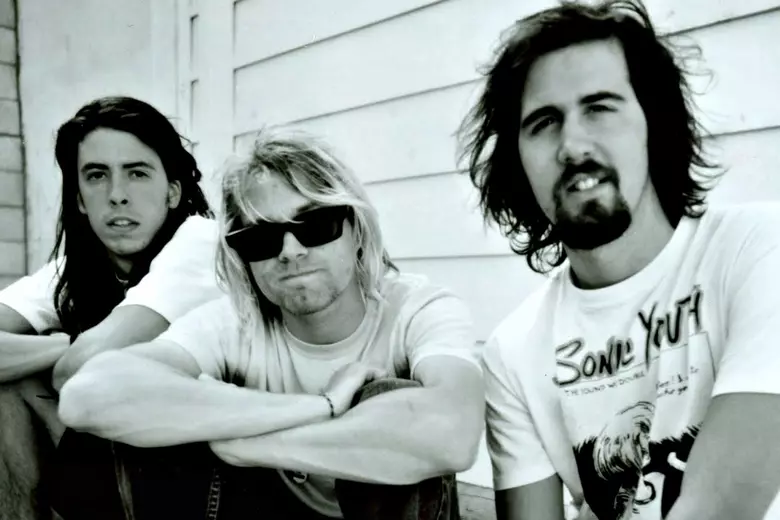
The idea of starting another group under the same spotlight felt wrong and almost impossible. At the same time, doing nothing was not an option.
So he went into a studio alone.
Recording alone after everything stopped
In late 1994, Grohl booked a small studio in Seattle and recorded a set of songs over six days. He played everything himself. Drums, guitars, bass, vocals. There was no band, no pressure to impress anyone, no expectation of what it should become.
The songs were not built as a statement. They were a way to keep moving.
Instead of releasing the recordings under his own name, he used a band name to keep the focus on the music. He called the project Foo Fighters, a reference to strange aerial sightings reported by pilots during World War II. It sounded anonymous enough to let the music stand on its own.
That first record, Foo Fighters (1995), carried a raw, direct sound. Tracks like “I’ll Stick Around” and “This Is a Call” showed a shift. The aggression was still there, but it sat alongside melody in a way that Grohl had not explored before.
The songs moved between quiet sections and louder bursts, but without stretching into long structures. Everything stayed tight.
The album gained attention quickly, not because it tried to replace Nirvana, but because it did not sound like it was trying to.
Turning a solo project into a band
Once the album was set for release, Grohl needed to turn the recordings into something that could exist on stage.
He brought in Nate Mendel on bass and William Goldsmith on drums, both from Sunny Day Real Estate, along with Pat Smear, who had already worked with Nirvana as a touring guitarist. This first lineup gave the project a band identity, but it was still in the process of forming.
Their early shows in 1995 carried a different energy from the studio recordings. The songs were louder, more physical, but still built on the same structure Grohl had established alone.
The real test came with the second album.
The Color and the Shape and early fractures
In 1997, the band worked on The Color and the Shape, the album that would define their breakthrough.
But the process was not smooth.
William Goldsmith recorded drum parts for the album, but Grohl was not satisfied with how they felt within the songs. Instead of working around it, he re-recorded many of the drum tracks himself. Goldsmith left the band soon after, feeling disconnected from the final result.
That moment shaped the Foo Fighters’ early identity. It showed how much control Grohl held over the music and how high his expectations were, even if it meant losing a band member.
Despite the internal strain, the album landed with force.
“Everlong” became the centerpiece. Not because it was louder or more aggressive, but because it carried a different kind of emotional weight. The shift between quieter sections and louder passages felt natural, not forced. It connected with listeners in a way that stayed long after the song ended.
“My Hero” followed with a more grounded tone, focusing on ordinary people instead of larger-than-life figures. “Monkey Wrench” brought back the speed and aggression.
This was the moment the band moved from a project into something established.

Stabilizing the lineup and refining the sound
After Goldsmith’s departure, Taylor Hawkins joined as the drummer in 1997. He had been touring with Alanis Morissette and brought both energy and precision to the band. His playing gave the songs a stronger foundation without changing their structure.
Chris Shiflett joined in 1999 as lead guitarist, adding another layer to the band’s sound. Over time, this lineup became stable, allowing the group to focus more on writing and less on internal changes.
That stability shows clearly in There Is Nothing Left to Lose (1999).
The album feels tighter. The production is cleaner, but the songs still hold onto the same core approach. “Learn to Fly” opened the band to a wider audience, built around a simple structure and a strong hook. It did not move away from their identity. It made it more accessible.
At this stage, the band had found a balance between heavier guitar-driven tracks and melodic songwriting.
Pressure, burnout, and the edge of breaking
By the early 2000s, the pace began to catch up with them.
During the recording of One by One (2002), the band ran into a different kind of problem. They spent months working on material that Grohl later felt did not represent the band. Instead of adjusting it, they stopped.
There was a break. For a while, it was unclear if the band would continue.
Grohl stepped away and worked with Queens of the Stone Age, playing drums on their Songs for the Deaf album. The shift gave him space to reset.
When the band came back together, they quickly rebuilt the album.
The final version of One by One carried a harder sound. “All My Life” opened with a tight, aggressive pattern, holding back before releasing into a louder section. “Times Like These” took a different direction, starting with a more restrained structure before expanding.
This period showed something important. The band could step away, briefly break apart, and still return with a clearer direction.

Loss returns: Taylor Hawkins
For years, the Foo Fighters continued with a steady rhythm. Albums expanded their sound in different ways, but the foundation remained the same.
That changed in March 2022.
Taylor Hawkins died in Bogotá, Colombia, just hours before the band was scheduled to perform. He was 50 years old.
The loss hit the band at a level that went beyond music. Hawkins was not only the drummer. He was part of the identity that had held the group together for more than two decades.
The band stopped immediately. Tours were canceled. For a time, there was no clear path forward.
When they eventually returned, bringing in Ilan Rubin on drums, it was not framed as a replacement. It was a continuation. The music remained, but the context had changed.
After the death of Taylor Hawkins in 2022, Foo Fighters returned with the album But Here We Are in 2023. The record was built around loss and the effort to keep moving, with Dave Grohl handling most of the drum parts during recording.
It did not try to replace what was gone. Instead, it acknowledged the absence and continued forward with the same core approach that had defined the band for years.

What the Foo Fighters became
The Foo Fighters never tried to recreate Nirvana. They moved in a different direction, even if the connection was always there.
Their music combined elements that helped it endure over time. The songs were built around strong, guitar-driven parts but still held on to melody, making them easy to connect with without feeling light.
The structures stayed clear and focused, without relying on complex arrangements. Many tracks moved between softer sections and louder moments, giving them shape without stretching too far. At the center of it all were hooks that stayed with listeners, not because they were simple, but because they were placed with purpose.
Across albums from Wasting Light to Concrete and Gold and Medicine at Midnight, they expanded into different sounds, but the core remained consistent.
Their live shows built another layer to their identity. Long sets, direct interaction, and an ability to turn large spaces into something that still felt connected.
Legacy
The Foo Fighters occupy a different place in rock history than Nirvana.
Nirvana disrupted everything. The Foo Fighters carried something forward.
They kept guitar-driven rock present through shifts in the industry, changes in listening habits, and the move into a digital era. They did not depend on one moment. They built across decades.
Dave Grohl’s journey sits at the center of that story. From standing behind the drums in one of the most important bands of the 1990s, to recording alone in a studio with no clear plan, to leading a band that would outlast most of its peers.
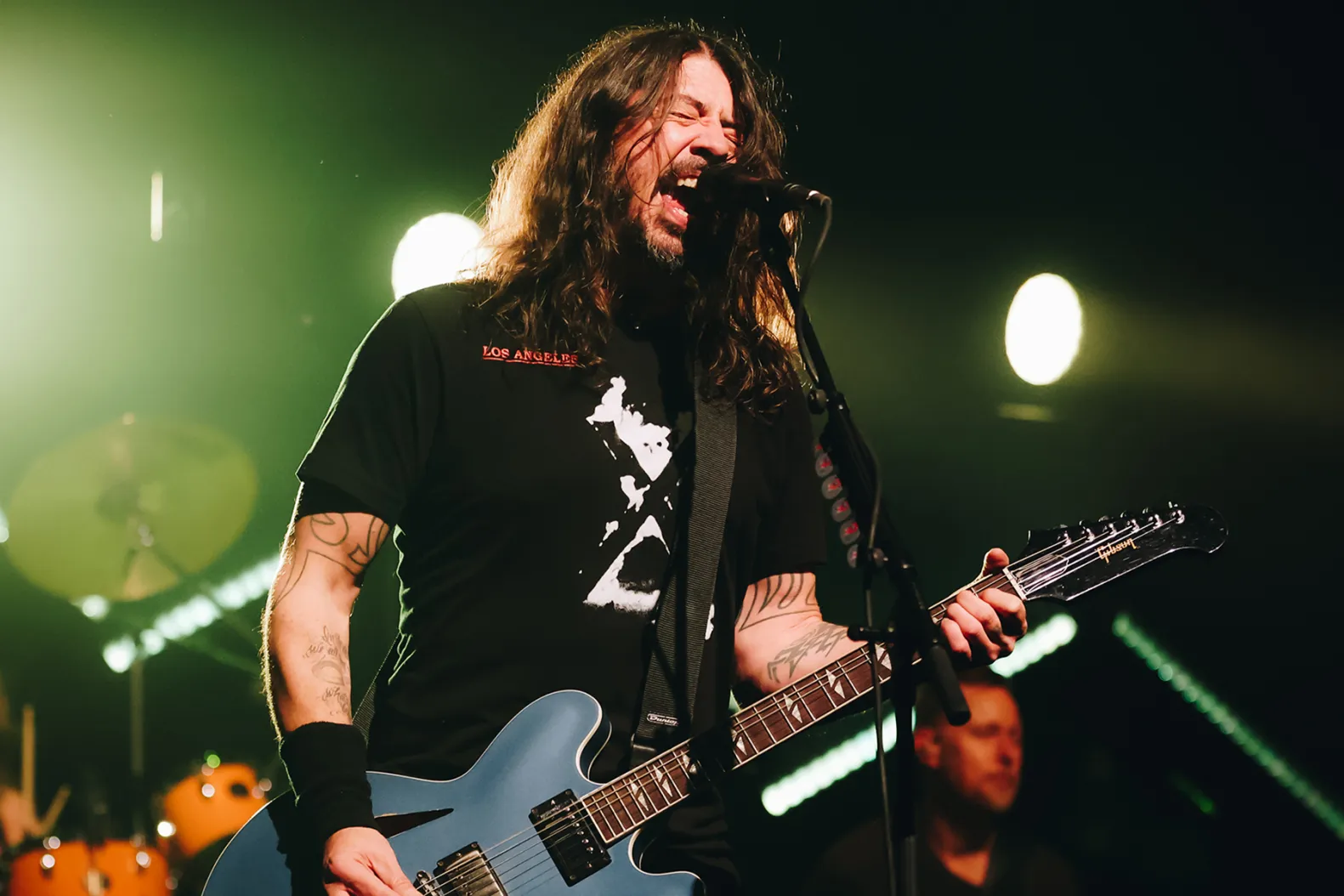
The path was not clean. It included loss, conflict, and moments where the band nearly stopped.
But each time, they returned to the same idea.
Write the songs, keep them tight, keep them honest, and keep the momentum going.
Dave Grohl, the man who never gave up and kept going, through loss, pressure, and every break along the way, without stepping away from the music.