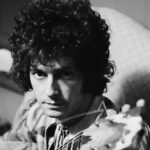

From a fragmented childhood and years of struggle in Los Angeles to New York performances, Grace, and a death that reshaped how his work was understood
Jeff Buckley was born Jeffrey Scott Buckley on November 17, 1966, in Anaheim, California. He was the son of singer-songwriter Tim Buckley and Mary Guibert, but his father was not part of his upbringing.
Tim Buckley and Mary Guibert separated early, and Jeff met his father only once, around age 8. That brief encounter, unfortunately, did not develop into a relationship, and most of his childhood was shaped by his mother and his stepfather, Ron Moorhead.
He grew up in Southern California, moving frequently around Orange County. During his early years, he was known as Scottie Moorhead, reflecting the influence his stepfather had on his daily life.
His home environment included music, but not in a career-focused way at first. His mother had musical training, and his stepfather introduced him to records that would leave a strong impression.
Around the age of twelve, Jeff Buckley made a clear decision about his future after listening to Led Zeppelin’s album Physical Graffiti. That moment gave direction to what had been a general interest in music.
He began focusing more seriously on the guitar and exploring different styles, including rock, jazz, classical, and vocal traditions outside Western pop music. His approach from the beginning was not limited to one genre, and that variety stayed with him throughout his life.
After finishing high school, he attended the Musicians Institute in Los Angeles. The experience gave him technical grounding, but it did not lead directly to recognition.
Through the 1980s, he spent years working as a session guitarist, playing with different artists and learning the practical side of the music industry. This period played an important part in his development as a musician, but it did not provide a clear path forward. He was skilled, but not yet visible.
During this time, he also worked with guitarist Gary Lucas in the band Gods and Monsters. This collaboration played a direct role in shaping his later work.
Early versions of songs like “Grace” and “Mojo Pin” came from this period, showing that the material that would define his career had already begun to take shape before he reached a wider audience.
By 1990, Buckley decided to leave Los Angeles and move to New York City. The change of environment was significant. In New York, he began performing in smaller venues, most notably at Sin-é in the East Village.
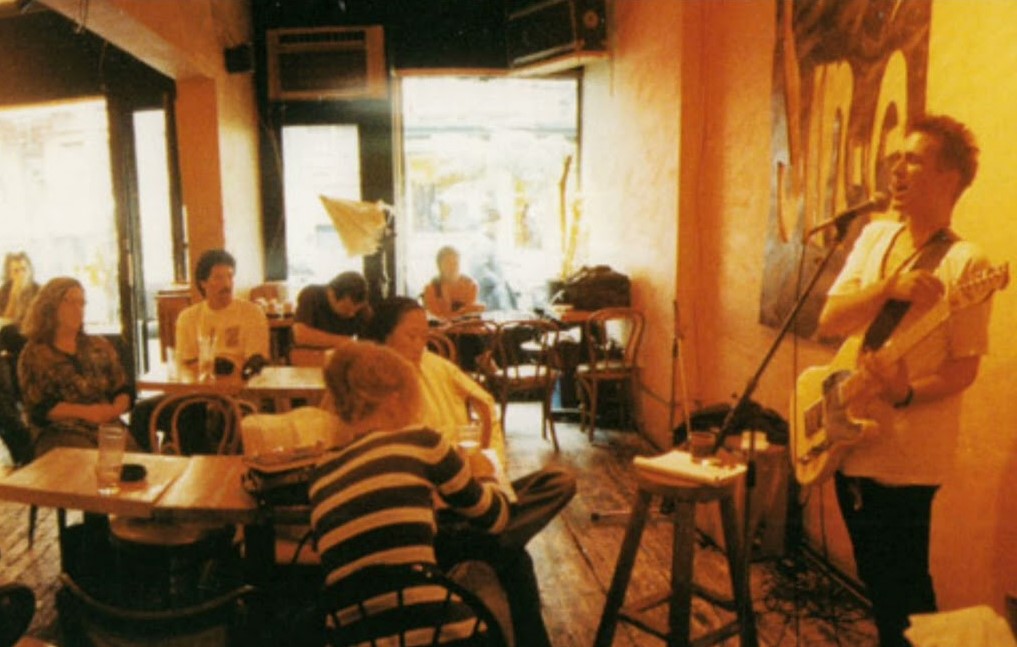
These performances became central to his early reputation. The setting was small and intimate, which allowed him to focus on voice, interpretation, and connection with the audience.
At Sin-é, he built attention through both original songs and covers. His approach to covers was distinctive. He did not treat them as simple reproductions. He reshaped them, often slowing them down or changing their emotional tone. This approach helped people understand his range as a performer.
During this period, he became deeply influenced by Nusrat Fateh Ali Khan. He listened closely to Nusrat’s recordings and studied the structure and emotional flow of Qawwali, especially the use of vocal improvisation, repetition, and gradual build within a song.
He often spoke about how Nusrat’s voice carried both power and control, which pushed him to expand his own vocal range and phrasing.
This influence can be heard in the way Buckley approached sustained notes, sudden shifts in intensity, and the layering of emotion within songs like “Grace” and “Dream Brother,” where his singing moves beyond standard rock phrasing into something more fluid and expressive.
His shows began attracting industry interest, and in 1992, he signed with Columbia Records.
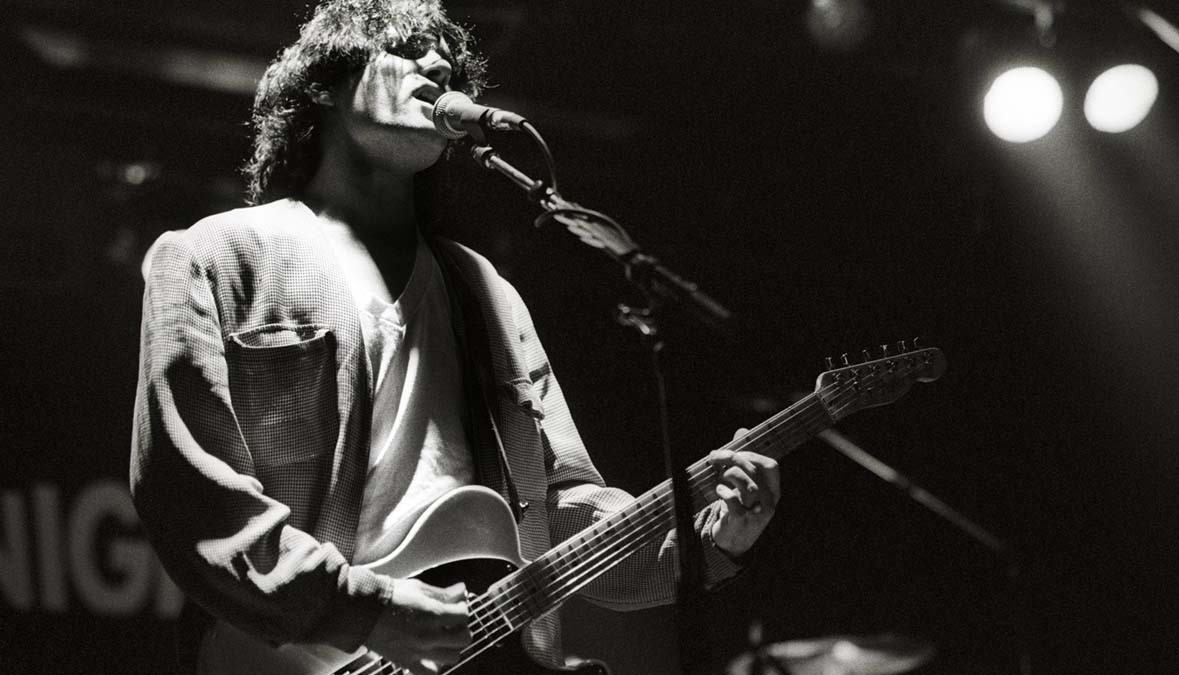
His first official release was the live EP Live at Sin-é, which captured the atmosphere of those early performances. It showed his ability to hold attention with minimal instrumentation and highlighted the strength of his voice.
Buckley took time before recording a full album to assemble a band that could match his musical direction. He worked with bassist Mick Grøndahl and drummer Matt Johnson, and later, guitarist Michael Tighe joined.
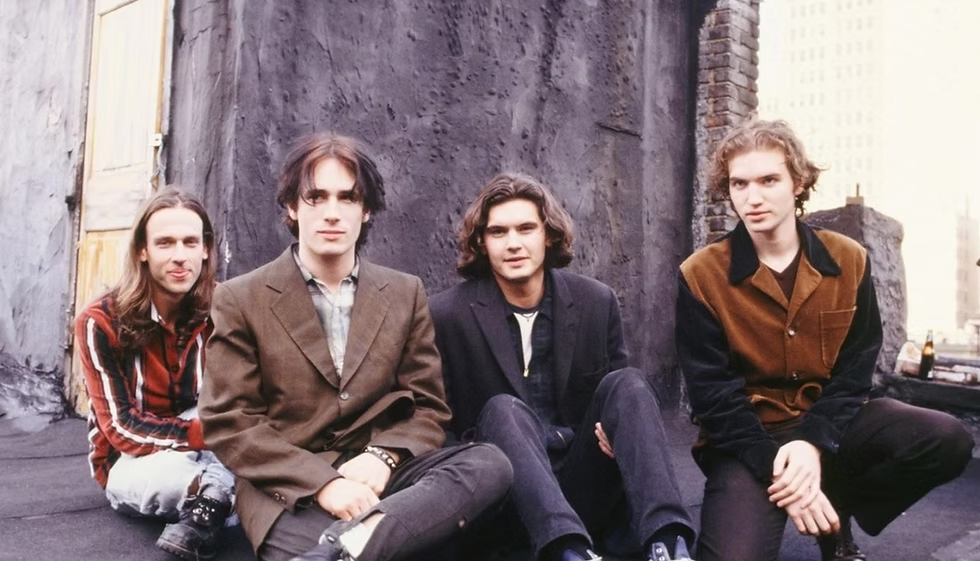
Tighe also contributed to songwriting, including work on “So Real.” This group became the core of the Grace sessions.
The album Grace was recorded in 1993 and released in 1994. It included original material alongside a few covers, such as “Hallelujah” (originally written by Leonard Cohen), “Lilac Wine,” and “Corpus Christi Carol.”
The album showed a wide range of influences without losing coherence. It moved between rock, folk, and more atmospheric passages, while keeping a clear focus on voice and structure.
At the time of its release, Grace did not achieve major commercial success. It reached number 149 on the Billboard 200 and remained on the chart for a limited period.
However, the response from critics and musicians was strong. The album established him as an artist with a distinct identity, even if the wider audience had not fully caught up yet.
Following the release, Buckley toured extensively. He performed across the United States, Europe, Japan, and Australia. His live shows became an important part of his reputation.
He was able to move between quiet, controlled sections and more intense moments within the same performance, maintaining attention without relying on spectacle. He also continued to perform solo in smaller venues, which helped maintain his connection with his audience.
By the mid-1990s, Buckley was preparing new material for a second album. His career was still in an early stage, but it was developing in a clear direction. He had established himself as a singer, guitarist, and songwriter, and there was a sense that his next work would expand on what Grace had introduced.
Unfortunately, on May 29, 1997, his life ended unexpectedly. Buckley drowned in the Wolf River Harbor in Memphis, Tennessee. Reports confirmed that there were no drugs in his system and only a small amount of alcohol. His death was ruled accidental. He was thirty years old.
The timing of his death changed how his work was received. Grace, which had been respected but not widely consumed, began to reach a much larger audience.
Listeners and musicians returned to the album and heard it differently, knowing there would be no further continuation by the artist himself. The sense that his career had been interrupted at an early stage became central to his legacy.
In the years that followed, his influence continued to grow. His version of “Hallelujah” became one of the most widely recognized recordings of the song.
Artists across genres have cited him as an influence, including Thom Yorke, Chris Cornell, Adele, Lana Del Rey, and Matt Bellamy. His vocal approach, which combined control with emotional openness, became a reference point for many singers.
He is often described as an artist whose work is studied and revisited rather than remembered. Bob Dylan referred to him as one of the strongest songwriters of his time, and David Bowie spoke about Grace as one of the most amazing albums he had heard.
What makes Jeff Buckley’s career stand out is not its length but its concentration. He spent years developing his skills before reaching a wider audience, released one studio album, and left behind a body of work that continues to grow.
His story moves from a fragmented childhood to a period of quiet development, then to recognition, and finally to a sudden ending that reshaped how everything that came before was understood.
His catalog is small, but it carries weight beyond its size.