
The part they leave out of every tutorial, every highlight reel, and every “just practice daily” pep talk
Nobody tells you the truth about learning music. Not really. What you get instead are YouTube videos of ten-year-olds playing Beethoven with their eyes closed, Instagram reels of guitarists shredding at impossible speeds, and well-meaning friends who say things like “just practice every day, and you’ll get there.
“What you don’t get is someone sitting across from you, looking you in the eye, and telling you what it actually feels like in the first few months. What it feels like in the first few years. So that’s what this is.
Let’s start at the beginning.
The day you decide to learn music is one of the best days of your life. Something shifts inside you.
Maybe you watched a live performance that gave you chills. Maybe you heard a song that felt like it was written specifically about your life. Maybe you picked up a guitar at a friend’s place and strummed one chord and felt something you hadn’t felt in a long time.
Whatever it was, something clicked. And in that moment, you made a decision. You were going to learn music. You were going to be one of those people.
That feeling is real. Don’t let anyone take it from you.
But here is what comes after that feeling, and this is the part nobody talks about enough.
The first time you sit down to actually learn, it is hard. Not hard in a dramatic, movie-style way where the hero struggles but eventually triumphs in the same scene. Hard in a quiet, frustrating, deeply personal way. Your fingers don’t do what your brain tells them to do. Your voice doesn’t sound like the voice in your head.
The chord that looked so simple in the tutorial feels like a puzzle your hands were never designed to solve. You practice for twenty minutes, and your fingers hurt. You practice for an hour, and you still sound nothing like the person you were watching online.
This is the moment most people quietly give up. Not dramatically. They don’t throw the guitar against the wall or slam the piano lid shut. They get a little busier. Life gets in the way. The instrument sits in the corner of the room collecting dust, and nobody ever really talks about it again.
If you have been through this, you are not alone. If you are going through this right now, keep reading.
Here is something that took many musicians years to understand. The gap between where you are and where you want to be is not a sign that you are doing something wrong. It is not a sign that you don’t have talent, or that you started too late, or that music is not for you.
That gap is just part of the process. It exists for everyone. It existed for every musician you have ever admired. The difference between the people who made it through and the people who didn’t is talent. It is the ability to keep going when things feel hopeless.
Eric Clapton, one of the greatest guitar players who ever lived, spent years playing in his bedroom before anyone ever heard him. He wasn’t born with a guitar in his hand. He sat in a room, alone, making mistakes, sounding terrible, and doing it again the next day.
Jimi Hendrix was so broke when he was starting that he sometimes didn’t have a guitar to practice on. He would borrow one when he could and practice until he had to return it. The legends you look up to were once beginners—every single one of them.
But there is another side to this that is equally true, and equally important.
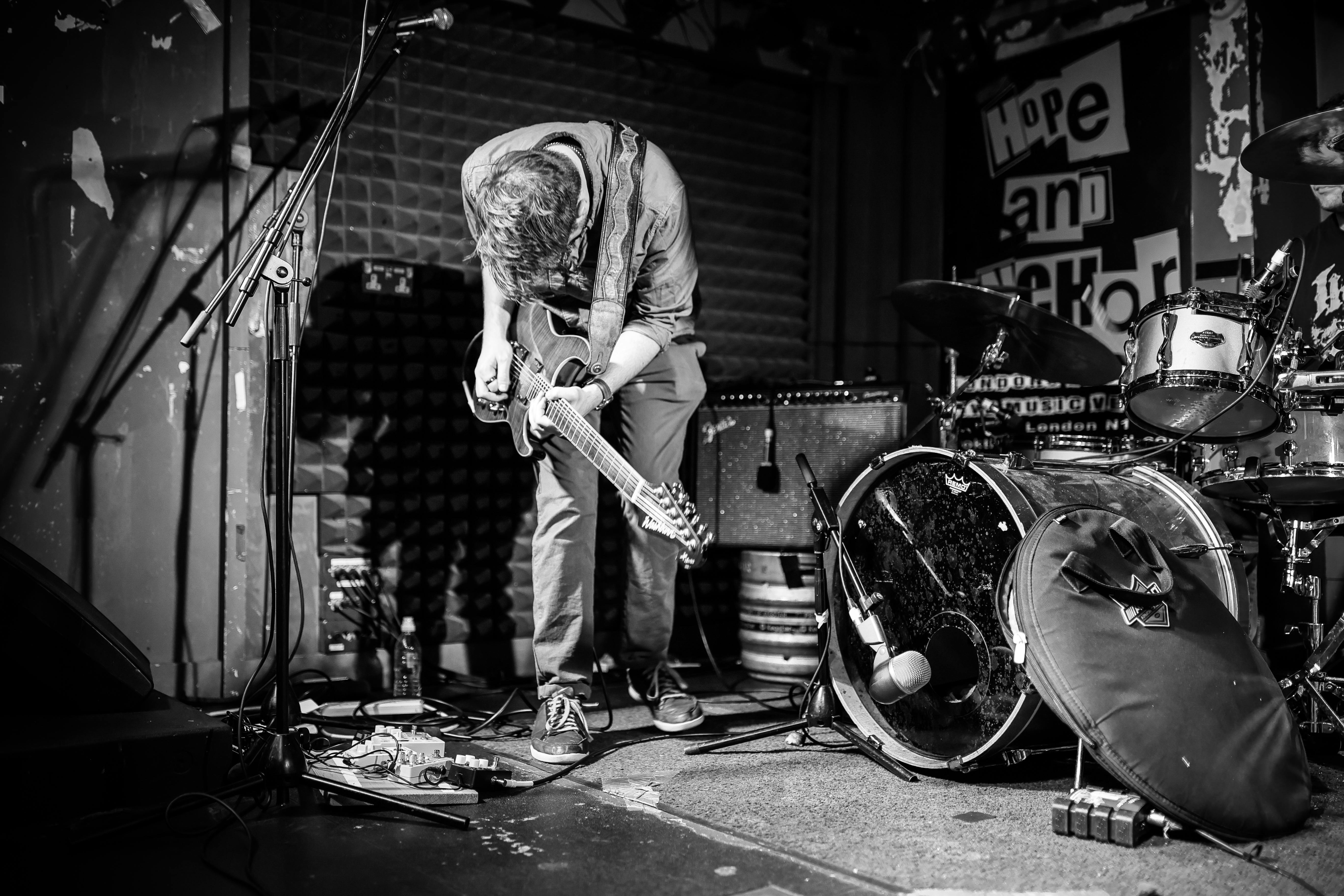
Learning music is not a straight line. It doesn’t get steadily better every single day. There are weeks when you feel like you are improving, when things click, when a song you’ve been struggling with suddenly starts to come together.
And then there are weeks where you feel like you’ve gone backward. Where nothing works. Where your hands feel clumsy, and your ears feel useless, and you wonder why you ever thought this was a good idea.
This is normal. This is how learning music actually works. The progress happens underneath the surface, even when you can’t see it. Your brain is building connections you don’t yet know about. One day, they will show up.
There is also the question of time, and this is something worth being honest about.
People often ask how long it takes to learn an instrument. The honest answer is that it depends on what you mean by “learn.” If you mean playing your favorite song well enough to enjoy it, maybe a few months of consistent practice.
If you mean playing well enough that other people enjoy listening to you, maybe a year or two. If you mean playing at a level where music becomes a real part of your identity, something you carry with you everywhere, something that gives your life a texture it didn’t have before, that takes longer.
Not because it’s impossible, but because that kind of relationship with music is built slowly, the way any real relationship is built. Through time, through patience, through showing up even when you don’t feel like it.
And here is something that doesn’t get said enough. You don’t have to be great. You really don’t. There is this pressure, especially in the age of social media, to be exceptional. To be the person who learned guitar in six months and is already playing gigs. To be the singer who went from beginner to YouTube sensation in a year.
Most people will never be that, and that is perfectly fine. Music was never meant only for the exceptional.
Music belongs to everyone who loves it. The person who plays guitar alone in their living room on a Sunday morning, not for an audience, not for approval, just because it makes them happy, that person is as much a musician as anyone else.
What music gives you, if you let it, is something very hard to put into words. It gives you a place to go. When things are heavy, when the world is loud and confusing, music is somewhere you can be that is only yours.
The act of making sound, of putting your hands on an instrument or opening your mouth to sing, does something to you that nothing else really does. It pulls you into the present moment in a way that is almost physical. Everything else falls away.
There is also the community. When you play music, even badly, even quietly, even alone in your bedroom, you become part of something that stretches back thousands of years.
Every person who ever picked up an instrument and tried to make something beautiful is connected to every other person who has done the same. That is not a small thing. That is actually a very large thing.
So here is where we land.
Learning music is hard. It is slow. It is humbling in ways you did not expect. There will be days you want to quit, and some of those days you might actually take a break. That’s okay.
But if music called you, if you felt that thing when you heard a song or watched a performance or touched an instrument for the first time, that call doesn’t go away. It waits for you.
The reality of learning music is not a story about natural talent or overnight success. It is a story about showing up. Again and again. In small rooms. With no audience. For no reason other than the music itself.
That is enough. That has always been enough.