
Slipknot wasn’t the first band to hide behind masks, but they perfected it for the modern era.
In 1995, nine musicians from Des Moines, Iowa, decided to hide their faces behind masks and refer to themselves by number rather than by name.
They wore horror-movie masks, clown makeup, and bloodstained boiler suits. They looked like they’d just crawled out of a slaughterhouse or escaped from an asylum.
The music world had never seen anything like Slipknot.
Twenty-nine years later, they’re still wearing masks. They’ve sold millions of albums, topped charts worldwide, and influenced many artists of the 21st century. Their latest album debuted at number one, and they still draw crowds of hundreds of thousands.
In the internet age, where anonymity is nearly impossible, everyone knows who’s behind the masks. Corey Taylor, Joey Jordison, and Shawn Crahan; their real names are public knowledge.
So why do the masks still matter?
And more importantly, does anonymity enhance the music, or has it become a gimmick that overshadows it?
A Brief History of Masked Bands
Slipknot wasn’t the first band to hide behind masks, but they perfected it for the modern era.
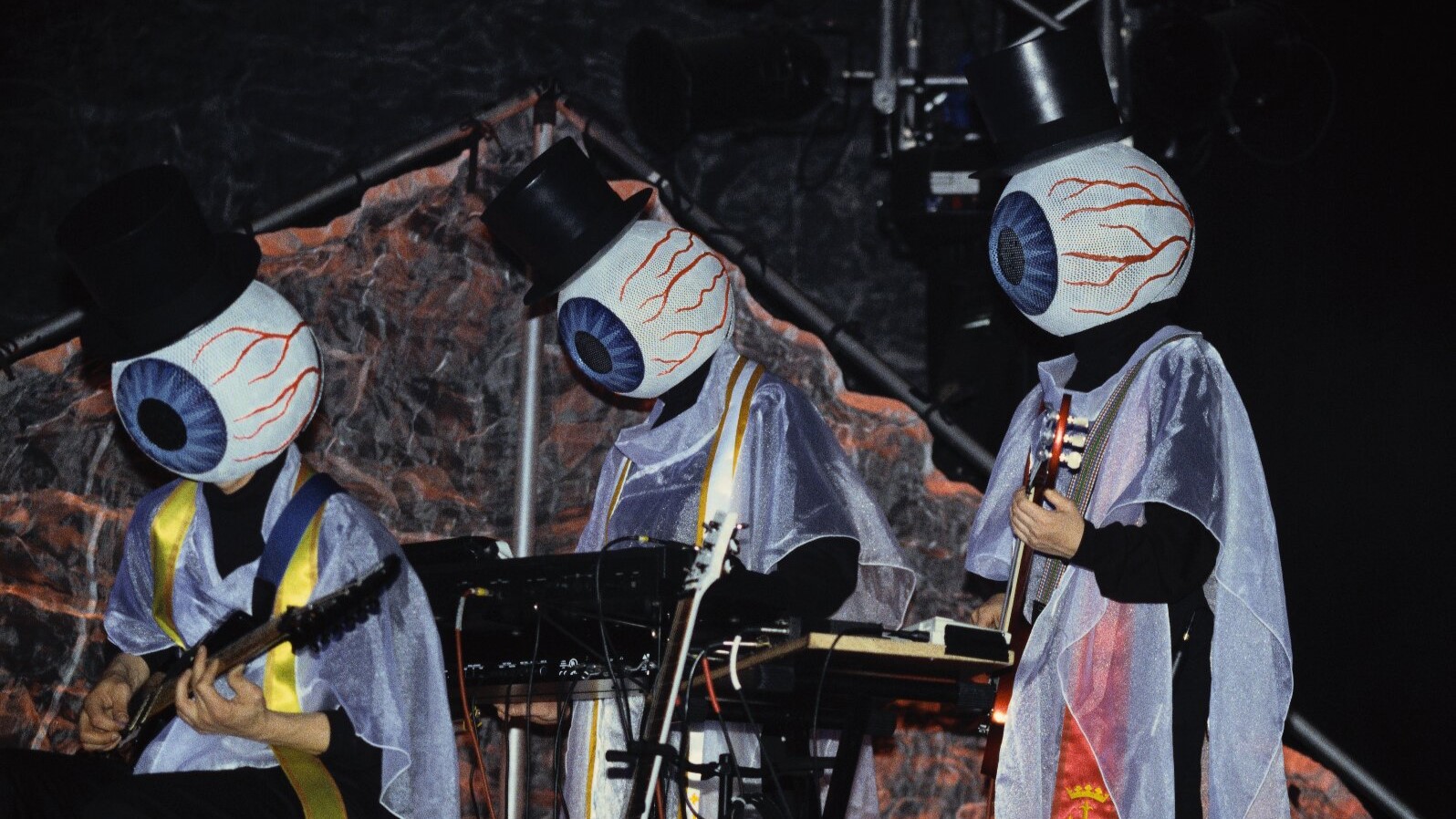
The Residents, an avant-garde art collective from Louisiana, began wearing giant eyeball masks and tuxedos in 1974. They’ve released 47 albums, and somehow, fifty years later, most members’ identities remain unknown. Hardy Fox publicly identified himself as a co-founder in 2017, but the rest? Still a mystery.
KISS painted their faces in the 1970s, creating larger-than-life personas. GWAR wore elaborate monster costumes. Ghost hid behind papal makeup and nameless “Nameless Ghouls.” Daft Punk donned robot helmets.
But Slipknot’s approach was different. Where KISS was a theatrical spectacle, and Ghost was occult mysticism, Slipknot’s masks were visceral and horrifying. They weren’t fantasizing; they were nightmare fuel pulled from rural America’s underbelly.
October 1995: The First Mask
It started with Shawn Crahan, the band’s percussionist and creative mastermind, known as Clown.
Before Slipknot’s first-ever gig on Halloween 1995, the band was discussing what to wear. Crahan pulled out a clown mask he’d bought at a mall for $49, his last $50, which was supposed to buy his girlfriend lunch.
“I pulled up the clown mask and said, ‘I’m wearing this,” he recalled. “A few of them were like, ‘No fucking way. You can’t be the only guy wearing some stupid mask.’ So I said, ‘I really don’t care what you think, this is who I am, and this is what I’m going to do.’
His bandmates hated the idea. But Crahan wore it anyway.
And suddenly, they all needed masks.
“We were all going around asking, ‘What are you going to wear?”Crahan said. The band scrambled to create identities. They decided to number themselves zero through eight, stripping away individual identities in favor of collective power.
The concept was simple: Let the music speak. Not our faces. Not our names.
“Music then was basically a template for a bunch of hot guys to sell a bunch of shit that didn’t mean anything,” frontman Corey Taylor explained. “We put a mask on, and we’re not about our fucking faces. It’s always going to be music first.”
1999: The Debut – Nine Nightmares
When Slipknot’s self-titled debut album hit in 1999, it arrived with a visual identity as brutal as the music.
Nine masked figures in red boiler suits, initially workwear designed so hot soot couldn’t burn skin, each wearing a unique horror:
Corey Taylor (#8): Deadlocked ghost face, expressionless and pale
Mick Thomson (#7): Hockey mask that evolved into a black leather gimp mask
Jim Root (#4): Inherited a black bondage mask, then switched to a jester’s mask
Craig Jones (#5): Crash helmet with nails hammered through it, flashlight on top
Sid Wilson (#0): Simple gas mask, futuristic and anonymous
Shawn Crahan (#6): The original clown mask that started everything
Chris Fehn (#3): Gimp mask with a long Pinocchio nose he’d “masturbate” on stage
Paul Gray (#2): Pig mask—the band told him it reflected his “self-indulgent nature.”
Joey Jordison (#1): Blank Japanese Kabuki mask, eerily emotionless

The aesthetic pulled from Des Moines itself, a city Corey Taylor described as defined by “ennui, complete banality, no culture, no hope.” Windswept prairies, cattle, junkyards, slaughterhouses.
The masks reflected rural American decay.
Their appearances at Ozzfest that year cemented their reputation: nine psychos flailing on stage, barely human.
Roadrunner Records, their label, hated the masks. They also didn’t want nine members. “I can’t tell you how many millions of dollars that label has made from us,” Crahan said later. “I take pride in knowing they were wrong, and I was right.”
The Evolution: Masks as Albums
Unlike bands with static looks, Slipknot completely redesigned their masks for each album cycle.
Iowa (2001): Masks got darker, gorier. Crahan’s Clown became blood-soaked. Taylor’s dreadlocks disappeared, replaced by something more skeletal. The album cover featured a mirror inside the case, and when parents opened it, they’d see themselves first. “I wanted people to reflect on themselves,” Crahan explained.
Vol. 3: The Subliminal Verses (2004): Masks became more elaborate, theatrical. Craig Jones’ nails got longer and more menacing.
All Hope Is Gone (2008): The band’s first #1 album. Masks pushed toward a groove-metal and emo-influenced sound, drawing criticism from some fans but achieving commercial success.
The Gray Chapter (2014): Released after bassist Paul Gray’s death in 2010 from a fentanyl-laced opioid overdose. The masks became tributes, heavier with grief.
We Are Not Your Kind (2019): The most disturbing iteration yet. Crahan’s warehouse studio overflowed with nightmarish designs. The album debuted at #1.
The End, So Far (2022): Latest evolution, still evolving, still masked.
The Paradox: Anonymity in the Internet Age
Here’s the irony: Everyone knows who they are.
Corey Taylor has written two books, given countless interviews, unmasked, and fronts another successful band (Stone Sour). Joey Jordison’s identity was public before his tragic death in 2021. Shawn Crahan has been photographed without makeup and has openly discussed his creative process with GQ, the BBC, and others.
The internet made true anonymity impossible. Yet, Slipknot’s masks still work.
Because the masks were never really about hiding.
They were about transformation. About creating a persona larger than the individual. About Maskenfreiheit, the German word for “the freedom that comes from wearing masks.”
“I got a version of this mask when I was 14,” Crahan said. “It was that moment of clarity, deciding what I wanted to project. This thing has no fucking limits.”
The masks became a cultural meme.
But Does It Overshadow the Music?
Anonymity feels powerful. It creates mystery, intrigue, and a sense of danger. But it can also become a crutch, a visual spectacle that distracts from the actual art.
Slipknot has always insisted: Music comes first.
“This was a way for us to wear the music on us kind of physically and create something that was striking,” Corey Taylor said. The masks were meant to amplify the music, not replace it.
And to their credit, the music backs it up. Songs like “Duality,” “Before I Forget,” and “Psychosocial” have distinct hooks that transcend the visual gimmick. Their latest album, We Are Not Your Kind, was praised for its “class-conscious rage” and “revolting, cathartic release.”
But let’s be honest: Would Slipknot be as massive without the masks? Probably not. The visual identity gave them an edge in a crowded nu-metal scene of the late ‘90s and early 2000s.
The masks helped them stand out. But the music made them last.
Lessons for New Musicians
Slipknot’s masked journey teaches us that visual identity can open doors, but only quality music keeps them open.
The masks got them noticed in a crowded nu-metal scene, but songs like “Duality” and “Psychosocial,” with genuine hooks and emotional depth, kept them going for 29 years. Anonymity works as a creative tool when it amplifies your art, not when it becomes a substitute for it.
Their consistency, always masked, always numbered, constantly evolving, built instant recognition across generations.
They proved you can transform yourself completely between albums while maintaining a core identity, and that sometimes the freedom to become someone else on stage lets you express truths you couldn’t otherwise.
But here’s the ultimate test: if you stripped away the masks tomorrow, would the music still matter?
For Slipknot, the answer is yes.
The masks were the vehicle, never the destination.
Music always came first, and that’s why they’re still here.
The Verdict
Anonymity can be powerful. Masks can create mystique, freedom, and transformation.
But music should always come first.
Twenty-nine years later, everyone knows who they are. But when they step on stage in those masks, they become something else. Something bigger. Something that refuses to be reduced to nine individuals from Iowa.
That’s the power of the mask. Not hiding. Transforming.
Would you wear a mask? Or let your music speak for itself?