

Ziggy Stardust. Aladdin Sane. The Thin White Duke. The Berlin experimentalist. The 80s pop star. The jazz-infused elder statesman.
Most musicians work hard to keep a consistent image throughout their careers. They usually develop a sound and style that fans can easily recognize.
David Bowie took a completely different approach.
For five decades, Bowie was known for one thing above all: he never stayed the same for long.
When people thought they understood him, Bowie would change into someone completely new.
Ziggy Stardust. Aladdin Sane. The Thin White Duke. The Berlin experimentalist. The 80s pop star. The jazz-infused elder statesman.
1972: Ziggy Stardust – The Alien
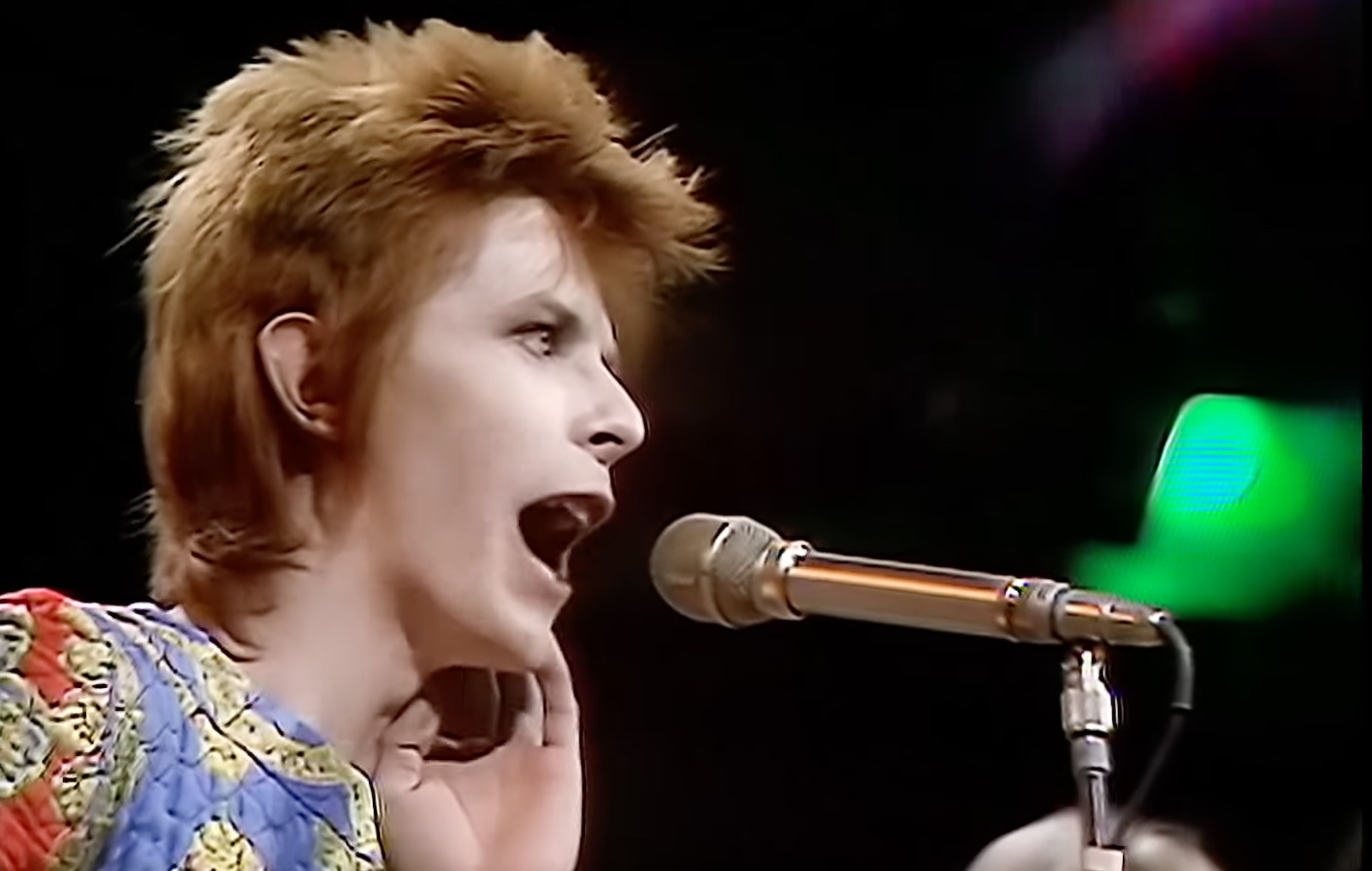
When David Bowie introduced Ziggy Stardust in 1972, along with the release of an album, he created a complete character. Ziggy was an androgynous alien rock star sent to Earth with a hopeful message.
He was flamboyant, bold, and otherworldly, wearing platform boots, bright red hair, and makeup that broke all the usual rock rules.m.
The Rise and Fall of Ziggy Stardust and the Spiders from Mars mixed rock, glam, and theater in a way that was totally new. Songs like “Starman,” “Suffragette City,” and “Rock ‘n’ Roll Suicide” didn’t just reflect the era, but they took rock music somewhere it had never been.
Ziggy stood for rebellion, sexual freedom, and creativity. When Bowie performed as Ziggy on Top of the Pops in 1972, he wasn’t just singing; he was acting out a character, telling a story, and putting on a show.
But what set Bowie apart from other musicians who took on new personas? He knew when it was time to let them go.
In 1973, when Ziggy was at his peak, Bowie announced a London concert: “This is the last show we’ll ever do.” He ended Ziggy Stardust’s story while fans were still eager for more.
1975-76: The Thin White Duke
As fans were still missing Ziggy, Bowie came back with something totally different: The Thin White Duke. The Thin White Duke.
This new character, seen on the 1976 album Station to Station, was the opposite of Ziggy’s bright energy. The Thin White Duke was cold, distant, and emotionally closed off. He wore sharp suits and had a piercing gaze.
While Ziggy was all about colorful rebellion, the Duke represented a kind of lonely, black-and-white isolation.
Station to Station looked at themes like addiction, isolation, and feeling broken. Songs such as “Golden Years” and the title track showed Bowie exploring his own mind and creating music that was both new and unsettling.
This was the time when Bowie was at his most vulnerable and troubled. He was struggling with cocaine addiction, living in Los Angeles, and hardly sleeping. The Thin White Duke reflected Bowie’s own mental state.
Years later, Bowie described this time as “the darkest days of my life” and said the Duke was “a very nasty character indeed.”
Artistically, though, it was fearless.
1976-79: Berlin – The Experimental Escape
By 1976, Bowie realized he had to leave Los Angeles and his harmful lifestyle behind, so he moved to Berlin.
In Berlin, working with producer Brian Eno and Tony Visconti, Bowie made what’s now called the “Berlin Trilogy”: Low (1977), Heroes (1977), and Lodger (1979).
These albums were some of the most experimental in Bowie’s career. They featured electronic sounds, unusual song structures, ambient instrumentals, and tracks that broke away from the usual verse-chorus format.
Producer Tony Visconti later said that Bowie wanted to avoid making another rock album. Inspired by German electronic music, especially Kraftwerk, Bowie aimed to push boundaries even more.
Heroes, recorded near the Berlin Wall, reflected the city’s tense and divided mood. The title song, about two lovers meeting at the Wall, became one of Bowie’s most lasting hits, even with its experimental sound.
Critics were puzzled, and commercial radio wasn’t sure how to handle it. But Bowie didn’t mind. He was making music for himself, not for the market.
Years later, these albums would be seen as some of the most influential in electronic and alternative music.
Artists from Bands like Joy Division and Nine Inch Nails have named them as inspirations.
Sometimes, the work that seems “too weird” at first ends up being the most important later on.
Comeback King
After years of experimenting, Bowie surprised everyone again by making a pop album.
Let’s Dance (1983), produced by Nile Rodgers, was pure commercial appeal. Funky. Danceable. Radio-friendly.
Songs like “Let’s Dance,” “China Girl,” and “Modern Love” dominated MTV and introduced Bowie to an entirely new generation. The accompanying “Serious Moonlight” world tour became one of the highest-grossing tours of the 1980s.
Some purists accused him of selling out. How could the man who created the Berlin Trilogy make… this?
But Bowie understood something crucial: Commercial success doesn’t erase artistic credibility if the work is genuine.
He wanted to make a pop album. So he hired the best producer for that job (Nile Rodgers) and made it brilliantly.
Let’s Dance sold roughly 7 million copies, his best-selling album ever. It proved Bowie could dominate both the experimental underground and the commercial mainstream.
The lesson: You don’t have to choose between artistic integrity and commercial success. You can do both, just not always at the same time.
2016: Blackstar – The Final Transformation
On January 8, 2016, David Bowie turned 69 and released his 26th studio album, Blackstar.
Three days later, he died of cancer.
Blackstar was unlike anything Bowie had done before. Jazz-infused. Electronic. Hip-hop influenced. Dark and experimental, with songs stretching past 10 minutes.
Inspired by rapper Kendrick Lamar’s To Pimp a Butterfly, Bowie worked with jazz saxophonist Donny McCaslin to create something that defied easy categorization. Producer Tony Visconti said Bowie specifically wanted to avoid making a rock album.
Even at 69, battling terminal cancer, Bowie refused to repeat himself.
The album’s cover, a simple black star on a white background, with the title rendered only as a ★, was as minimalist and mysterious as the music.

Critics immediately recognized it as a masterpiece. Many called it one of the highlights of his entire career.
Bowie had recorded it while undergoing an 18-month battle with cancer. Blackstar was his epitaph, crafted with full awareness of his mortality.
The haunting title track, the short film accompanying it (featuring demonic rituals on a distant planet), and the cryptic lyrics all took on new meaning after his death.
He was saying goodbye. And he was doing it his way.
The Numbers Behind the Legend
David Bowie’s impact is staggering:
26 studio albums over nearly 50 years
140 million records sold worldwide
9 UK #1 albums (5 in the US)
Estimated $230 million net worth at death
A 2,700% increase in Spotify streams the day after his death
But beyond numbers, his influence is immeasurable. Artists from Madonna to Nirvana to Kanye West cite him as inspiration.
In 2002, the BBC ranked him #29 on their list of 100 Greatest Britons.
He won only one competitive Grammy (for the “Blue Jean” video in 1985) but received a Lifetime Achievement Award in 2006.
He was inducted into the Rock and Roll Hall of Fame in 1996.
And in a 2002 interview, Bowie himself said: “What I’m most proud of is that I can’t help but notice that I’ve affected the vocabulary of pop music.”
The Philosophy: Who Was David Bowie?
In a 2002 interview, Bowie revealed something surprising: despite all the different personas and sounds, he’d “really only worked with the same subject matter” throughout his career.
“The trousers may change,” he said, “but the actual words and subjects I’ve always chosen to write with are things to do with isolation, abandonment, fear, and anxiety, all of the high points of one’s life.”
Commercial Success Doesn’t Mean Selling Out
Let’s Dance was pure pop after years of experimentation. But it was good pop, made with intention.
There’s no shame in wanting commercial success, as long as you’re not compromising what matters to you.
Don’t Fear Failure
Some Bowie albums flopped commercially. Some confused critics. He kept going.
Not every experiment succeeds. That’s not a reason to stop experimenting.
By constantly changing, Bowie stayed relevant for 50 years. Each new persona attracted new audiences while keeping longtime fans engaged.
If you sound the same at 50 as you did at 20, you’re not growing, you’re stagnating.
David Bowie died on January 10, 2016, but his influence continues.
His music still streams millions of times daily. His fashion choices still inspire designers. His fearlessness still encourages artists to take risks.
As he predicted in 2002: “The absolute transformation of everything that we ever thought about music will take place… and nothing is going to be able to stop it.”
He was right. And he showed us how to navigate that transformation: by never staying still.
David Bowie refused to be defined. And in doing so, he became unforgettable.