

From small Limerick rooms to global stages, The Cranberries built a sound that carried intimacy and anger in equal measure, before ending with a silence no one expected
The Cranberries formed in Limerick, Ireland, in 1989, at a time when opportunities for international exposure from smaller Irish cities were limited. The original lineup, Noel Hogan on guitar, Mike Hogan on bass, and Fergal Lawler on drums, began under the name The Cranberry Saw Us.
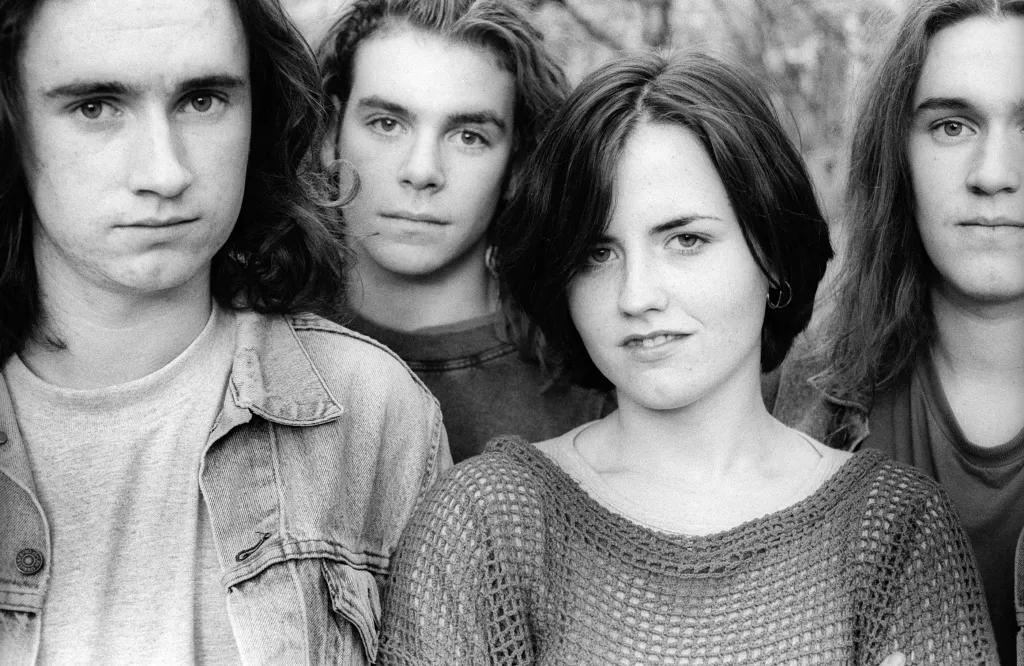
At that stage, the band had direction but not identity. Their early material followed familiar indie and alternative patterns, and their initial vocalist did not define a clear path forward.
That changed when Dolores O’Riordan joined.
She was eighteen, without a developed public persona, but with a clear instinct for melody and phrasing.
She brought not only a different voice but a different way of writing. She reworked early demos, including what would become “Linger,” and introduced a vocal style shaped by Irish musical tradition, church singing, and an instinctive understanding of emotional pacing.
With her arrival, the band shortened its name to The Cranberries and began again with a more defined sound.
The structure of their music relied on restraint and clarity. Noel Hogan’s guitar work often featured clean tones and repeating arpeggios rather than distortion-heavy riffs. Mike Hogan’s bass lines provided grounding rather than complexity, and Fergal Lawler’s drumming emphasized timing and space over technical display.
This arrangement created room for O’Riordan’s voice to function as the central instrument.
Her vocal approach combined several elements. There was a strong Irish phrasing pattern, noticeable in how she shaped vowels and carried notes.
There was also a controlled use of breath and tone, allowing her to move between softer passages and more forceful delivery without disrupting the song’s structure. Her voice did not sit on top of the music; it moved within it, adjusting to the arrangement rather than overpowering it.

The band’s influences included British guitar-driven acts such as The Smiths and The Cure, along with Irish folk traditions and broader alternative rock movements of the late 1980s. These influences were present but not dominant.
What emerged was a hybrid style that allowed them to fit within the alternative rock category while maintaining a distinct identity.
Their debut album, Everybody Else Is Doing It, So Why Can’t We? (1993), introduced this sound in a complete form. The release did not immediately achieve large-scale success but gained traction through repeated airplay and touring.
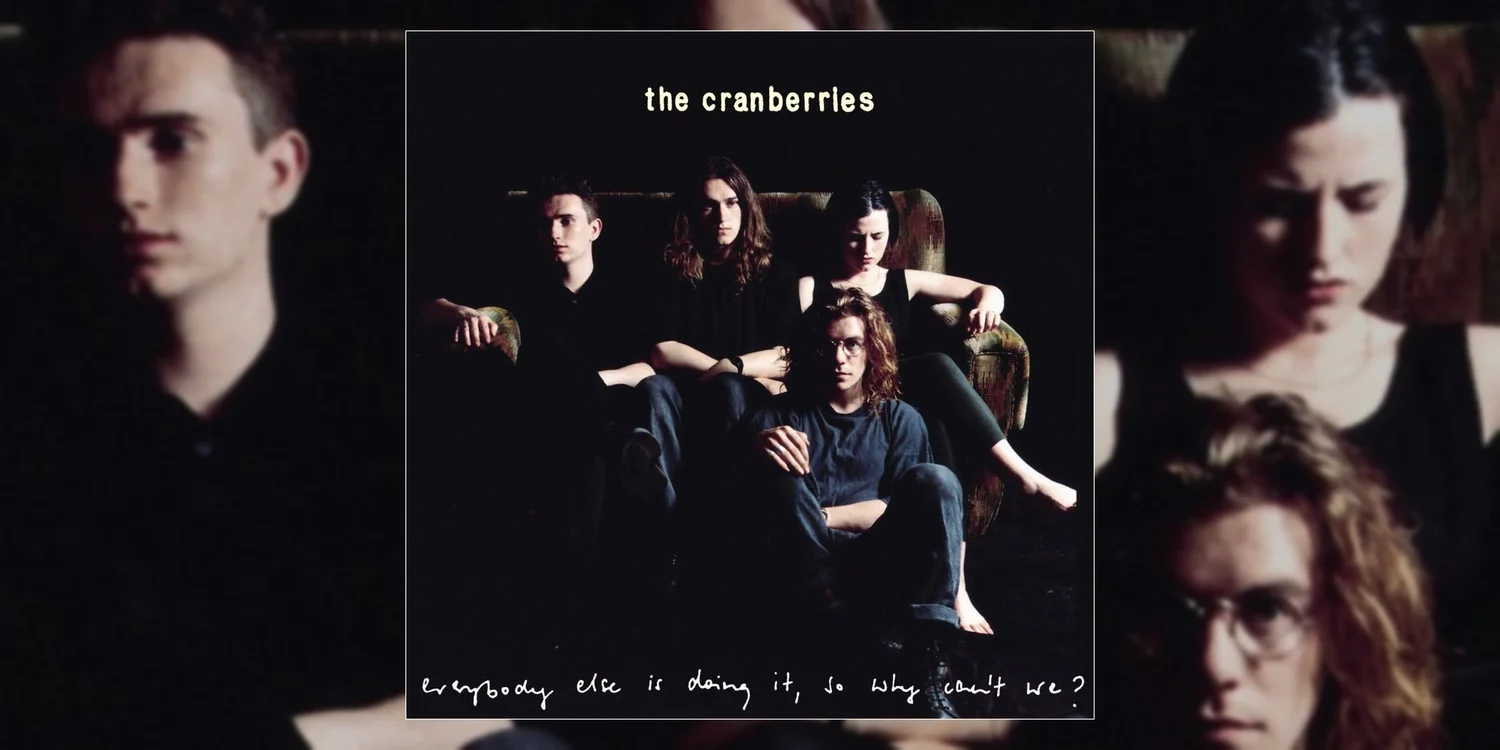
“Dreams” served as an introduction, built on a repeating guitar figure and a steady rhythmic base. The song established their melodic approach and highlighted O’Riordan’s phrasing.
“Linger” became the defining track of the album.
Its arrangement is built around a string section layered over a simple chord progression. The tempo remains controlled, and the vocal delivery avoids exaggeration. The lyrics, drawn from O’Riordan’s own experience of early heartbreak, focus on hesitation, attachment, and the difficulty of letting go.
The song’s impact comes from its precision. It does not overstate its emotion, which allows the listener to project their own experience onto it.
The success of this album moved the band from regional recognition to international attention.
Their second album, No Need to Argue (1994), expanded both their reach and their thematic range. The most prominent track, “Zombie,” marked a shift in tone.

Written in response to violence in Northern Ireland, specifically the Warrington bombings, the song addresses the cycle of conflict directly. The instrumentation changes accordingly. The guitar sound becomes heavier, the rhythm more direct, and the vocal delivery more forceful.
O’Riordan’s performance on “Zombie” uses repetition and emphasis to reinforce the subject matter. The lyrics reference historical continuity in the conflict, pointing to long-standing divisions rather than isolated events. The structure of the song supports this approach, relying on repetition to create intensity.
At the same time, the album retains balance.
Tracks like “Ode to My Family” return to personal themes, focusing on memory and childhood. “I Can’t Be with You” continues the band’s exploration of emotional conflict within relationships. This combination of personal and political material allowed the album to reach a wide audience without losing coherence.
By the mid-1990s, The Cranberries had established themselves as a major international act. Their success was built on consistent songwriting, a recognizable vocal identity, and sustained touring. They were able to move between radio-friendly singles and more reflective material without dividing their audience.
The next phase of their career showed both expansion and pressure.
To the Faithful Departed (1996) introduced a more aggressive tone in parts of the album. Songs like “Salvation” emphasize speed and urgency, while others address broader themes such as media influence and social conflict. The album reflects a band responding to its position in a changing musical landscape.
Bury the Hatchet (1999) shifted direction again, returning to a more melodic and structured approach. Tracks like “Just My Imagination” highlight a lighter tone while maintaining the band’s focus on emotional clarity. The album suggests a band adjusting its sound rather than repeating previous formulas.
By the early 2000s, the cumulative effects of touring and recording began to show. Wake Up and Smell the Coffee (2001) did not achieve the same impact as earlier releases, and internal strain led to a pause in activity. Around 2003–2004, the band entered a hiatus.
During this period, O’Riordan released solo albums, including Are You Listening? and No Baggage, which continued her focus on personal themes. Noel and Mike Hogan explored other musical projects, maintaining activity outside the band.
The reunion in 2009 marked a return to live performance. The band resumed touring and later released Roses (2012). The album continued their established style, focusing on melody and arrangement without attempting to replicate earlier commercial peaks. It reflected a mature phase rather than a reinvention.
In 2017, Something Else revisited earlier material through orchestral arrangements. The project reinterpreted songs like “Linger” and “Zombie” in a different format, emphasizing structure and composition rather than original production.
At the same time, the band was working on new recordings.
Unfortunately, in January 2018, Dolores O’Riordan died in London. Her death was confirmed as an accidental drowning following alcohol intoxication. The event brought an immediate end to the band’s future as an active entity. The remaining members chose not to continue under the same name without her.
They completed the material she had recorded, releasing In the End in 2019.
The album serves as a closing statement rather than a continuation. It maintains the band’s established approach, focusing on melody, structure, and vocal presence. The songs reflect both continuity and finality, shaped by the circumstances under which they were completed.
Two songs illustrate the range of The Cranberries’ work.
“Linger” represents their early focus on personal experience. Its restrained arrangement and controlled vocal delivery create a sense of emotional precision. The song captures a specific moment while remaining broadly relatable.
“Zombie” represents their engagement with political themes. Its heavier instrumentation and direct language reflect a different kind of intensity. The contrast between the two songs demonstrates the band’s ability to move between internal and external subjects without changing their core identity.
The Cranberries maintained a consistent musical language throughout their career. Their work combined clear melodic structure, controlled arrangements, and a distinct vocal presence.
They did not rely on technical complexity or dramatic shifts in style. Instead, they developed a recognizable approach and applied it across different themes.
Their career reflects steady development rather than abrupt change. They moved through phases shaped by growth, pressure, and external circumstances.
The final chapter, defined by O’Riordan’s death, closed the band’s story in a way that could not be extended.
What remains is a body of work defined by structure, melody, and a voice that carried both vulnerability and strength without losing clarity.