

Born in Seattle’s grunge underground, the famous smiley face came to represent rebellion, authenticity, and the strange journey of an anti-corporate symbol
Few images in rock history are as recognizable as Nirvana’s smiley face.
Three quick strokes form the eyes into uneven Xs. A loose curved line creates the smile. A tongue hangs awkwardly from one side of the mouth, giving the face an expression that looks cheerful, confused, exhausted, and mischievous all at once.
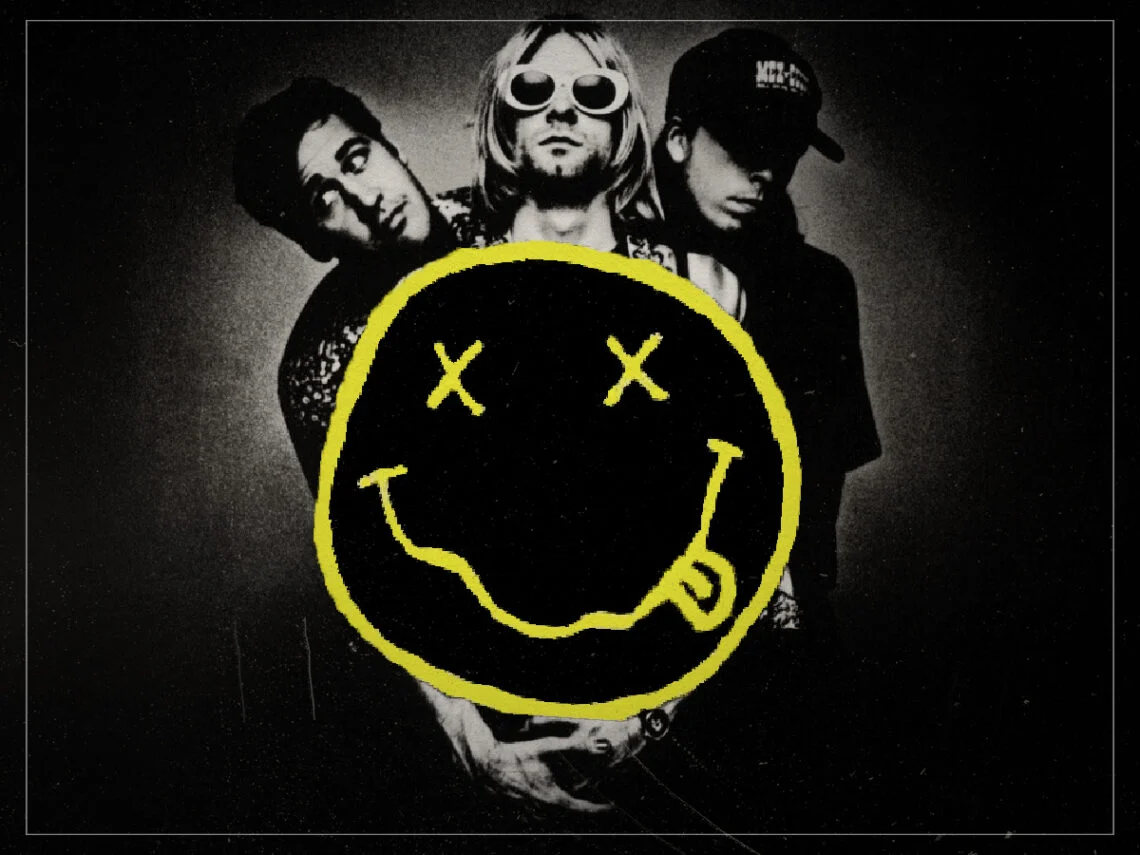
Today it appears almost everywhere.
It has been printed on millions of T-shirts, hoodies, posters, vinyl sleeves, phone cases, coffee mugs, skateboards, and fashion collections. People wear it even if they have never listened to a Nirvana album.
That worldwide recognition is exactly what makes the image so fascinating.
The drawing began as something rough and disposable, closely tied to Seattle’s underground music scene. It carried none of the clean precision usually associated with famous corporate logos. It looked like something that could have been sketched on a scrap of paper moments before being photocopied for a local concert flyer.
Yet over time, it became one of the most valuable visual identities in rock music.
Its journey says almost as much about popular culture as Nirvana’s music itself.
Seattle Before the World Was Watching
During the late 1980s, Seattle was building a music scene that looked very different from the glamorous rock culture dominating television.
Los Angeles still celebrated polished hair metal bands with elaborate stage productions, expensive videos, and carefully constructed public images. Success often depended as much on appearance as on songwriting.
Seattle developed almost in the opposite direction. Bands played in worn clubs rather than arenas. Second-hand clothes replaced leather costumes. Distorted guitars replaced glossy production. The emphasis shifted toward honesty rather than perfection.
Out of that environment came groups like Soundgarden, Mudhoney, Alice in Chains, and eventually Nirvana.
The city developed its own identity through independent labels, local venues, and a community that valued authenticity more than commercial ambition.
That attitude shaped everything connected to the scene.
Album covers, concert flyers, and posters were often designed by friends, local artists, or the bands themselves. Photocopied flyers covered telephone poles, independent record stores, and café windows, while artwork reflected the same rough, handmade character as the music.
Nothing was created to look expensive. The focus stayed on getting the music in front of people rather than building a carefully managed image.
Band logos appeared hand-drawn rather than professionally designed. Imperfection became part of the visual language.
Nirvana fit naturally into that world.
When Kurt Cobain, Krist Novoselic, and later Dave Grohl began attracting wider attention, they carried many of those underground values with them.
Success eventually arrived. The attitude stayed largely the same.

A Drawing With No Clear Beginning
Unlike many famous logos, Nirvana’s smiley face does not have one universally accepted origin.
That uncertainty has become part of its story.
The most widely accepted timeline places its first appearance around 1991 during the Nevermind era. The image appeared on promotional material created for the band’s album-release party before spreading onto shirts, stickers, buttons, and other merchandise.
Who actually created it remains a subject of debate. Many people believe Kurt Cobain drew it himself. Others have connected the design to artists working around Sub Pop, the label closely associated with Seattle’s grunge movement.
Another popular explanation points toward Seattle’s Lusty Lady strip club. The club’s marquee reportedly displayed a smiley face that may have inspired the design, though no definitive evidence has settled the question.
Part of the logo’s appeal comes from that uncertainty.
It feels like something that simply appeared within the culture rather than arriving through a carefully planned branding campaign.
That sense of mystery fits Nirvana perfectly.
Why the Face Worked
At first glance, the drawing seems almost childish. A closer look tells a different story. The eyes are replaced by uneven Xs. The smile tilts awkwardly across the face. The tongue hangs to one side, creating an expression that resists easy interpretation.
Is the face laughing? Is it exhausted? Is it intoxicated? Is it mocking someone?
The image never fully answers those questions. That ambiguity became one of its greatest strengths.
It reflected the emotional contradictions inside Nirvana’s music.
Songs often moved between melody and distortion, vulnerability and anger, quiet reflection and explosive energy. The smiley face carried a similar tension. It suggested happiness while quietly undermining the idea of a perfect smile.
Even small details became part of its mythology.
Kurt Cobain reportedly intended the tongue to point upward. Later accounts suggest he disliked the final version because the tongue’s position made the face appear dazed or drugged rather than playful.
Whether intentional or accidental, the finished drawing captured something larger than its creator may have expected.
It looked imperfect. That imperfection became memorable.
The Explosion of Nevermind
When Nevermind arrived in September 1991, few people expected what followed.
The album steadily gathered attention through radio, television, and relentless touring before becoming one of the defining releases of the decade. Songs like “Smells Like Teen Spirit,” “Come as You Are,” and “Lithium” introduced Nirvana to audiences far beyond Seattle.
As the music spread across the world, so did the smiley face.

It appeared on concert merchandise. Record-store displays. Magazine advertisements. Fan-made artwork.
Soon it became almost impossible to separate the image from the band itself.
Unlike the carefully designed logos adopted by many major rock bands, Nirvana’s drawing looked as though it had been sketched in a few quick strokes and left exactly as it was.
Anyone could copy it. Anyone could redraw it. That simplicity helped it travel.
The design became recognizable at a glance.
Long before social media accelerated visual culture, Nirvana had created an image that functioned almost like a modern internet icon.
Its popularity also reflected something deeper. Fans were not simply buying a logo. They believed they were carrying a piece of the band’s culture.
The smiley face represented Seattle, grunge, independence, and a generation that often distrusted polished commercial images.
Ironically, those same qualities made it extraordinarily valuable.
When Rebellion Became a Brand
Perhaps no part of the smiley face’s story captures its significance better than what happened next.
As Nirvana’s popularity continued growing, the image escaped the world that produced it.
It moved into shopping malls. Fashion campaigns. Department stores. Luxury clothing collections. Global licensing deals.
The drawing that once looked like an underground photocopy gradually became one of rock music’s strongest commercial assets.
That transformation carries a remarkable irony.
Nirvana built much of its reputation on skepticism toward commercial excess.
Kurt Cobain frequently expressed discomfort with celebrity culture, corporate marketing, and the pressures that accompanied massive success.
Yet the smiley face became exactly the sort of globally recognizable brand identity that punk and grunge had often questioned.
The contradiction is impossible to ignore. The image survived because it entered the commercial world. Its meaning became more complicated because it did.
That contradiction reached another chapter decades later when Nirvana pursued legal action against fashion house Marc Jacobs over a design that closely resembled the famous smiley face.
The lawsuit centered on copyright and trademark protection, raising questions about ownership, artistic borrowing, and commercial use.
From a legal perspective, the case concerned intellectual property. From a cultural perspective, it highlighted something much larger.
A symbol born within an anti-establishment music scene had become valuable enough to defend in court like any global brand.
More Than a Logo
Nirvana’s smiley face continues appearing more than three decades after it first surfaced because it captures an idea larger than the band itself.
It reflects the rough edges that defined grunge.
It reminds people of a period when rock music rejected polish in favor of honesty.
It also serves as a quiet reminder that popular culture has an extraordinary ability to absorb rebellion, package it, and sell it back to the public.
That may be the greatest irony surrounding the famous smiley face.
It began as a loose, imperfect drawing connected to Seattle’s underground music scene.
Today it stands among the most recognizable images in rock history, protected by trademarks, reproduced across industries, and worn by millions of people around the world.
Some recognize it because they love Nirvana. Some wear it because they like the design. Others may never know where it came from. The drawing still works.
Perhaps that is its greatest achievement.
It continues to invite questions without ever providing a single answer.
And for a band that rarely embraced simple explanations, there could hardly be a more fitting symbol.