
How John Bonham drummed his way from a Redditch caravan to the greatest rhythm section in rock, and why the band died the day he did
When John Bonham was five, he built a drum kit from a bath salt container, some coffee tins, and a few pots from his mother’s kitchen. He fitted strands of wire to the bottom of the container so it would rattle like a snare, and he beat it with knives and forks.
He was born on 31 May 1948 in Redditch, Worcestershire, in the middle of working-class England, and from the moment he could sit up straight he was hitting things and listening to how they answered back.
His parents noticed early. His mother Joan gave him a real snare drum when he was ten. His father Jack, who ran a building company, bought him his first full kit at fifteen, a Premier Percussion set. Nobody sent him for lessons, and he never took a single formal one.
He learned by watching the drummers he loved on records and on the radio, men like Gene Krupa, Buddy Rich, and Max Roach, American jazz players who twirled their sticks and made the drums the loudest, proudest thing in the room.
Bonham copied their showmanship and swing, but he did something they never did. He was hitting the drums harder than almost anyone alive.
That was what set him apart and kept getting him into trouble. Around Redditch and Birmingham, he built a reputation as one of the best young drummers going, a player with power, stamina, and stage presence.
He also played so loudly that venues banned him. Many clubs had power limiters that cut the electricity if the volume passed a set point, and Bonham would blow past the line and kill the power mid-set.
He laughed about it for years afterward, telling friends he got blacklisted in Birmingham. When his early band A Way Of Life went into a studio to cut some demos, the engineer told him his drumming was unrecordable because his kit was simply too loud for the equipment.
Years later, once Led Zeppelin had conquered the world, Bonham posted that same engineer a gold record with a note reading “Thanks for the advice.”
His headmaster at Lodge Farm Secondary Modern School had written in a report that the boy would either end up a dustman or a millionaire. There was no middle path in him, and everyone around him seemed to sense it.
He married young. He met Pat Phillips at a gig in Kidderminster when he was sixteen, and they married in 1965 when he was seventeen. Money was tight, so the young couple lived in a caravan owned by his father, then later in a high-rise flat in Dudley.
They were still living in that flat when the first Led Zeppelin album came out and changed everything. To keep money coming in, Bonham took a day job with a tailor’s shop and worked as a carpenter’s apprentice for his dad, drumming with local bands at night.
He drifted through a string of them: the Blue Star Trio, Gerry Levene & the Avengers, A Way Of Life, the Crawling King Snakes. In these Midlands bands, he first crossed paths with a young singer named Robert Plant, and the two played together in a group called Band of Joy.
They became close, two ambitious kids from the same corner of England who wanted more than the pubs could give them.
Bonham was never shy about his talent. Friends remembered going out to watch other bands with him, and the first thing he would say was that the drummer was no good.
During the break he would walk straight up to the bandleader and offer to show him how it should be done, then sit down and pound the kit to pieces. More than once he took the other man’s gig on the spot.
By the summer of 1968, his life reached its turning point, though he almost missed it. Jimmy Page had just watched his old band, the Yardbirds, fall apart and was building something new to fulfill a run of concert dates in Scandinavia. He needed a drummer.
Plant, whom Page had recently recruited, told him to go and see Bonham. Page and the band’s manager Peter Grant went to watch Bonham play behind singer Tim Rose at a club in Hampstead, north London, and within one set they knew. This was the man.
The trouble was that Bonham did not want the job. He was finally earning steady money with Tim Rose and had other offers from bigger names like Joe Cocker and Chris Farlowe.
He was married, with a young family and a caravan behind him, and he was not about to gamble his income on an unknown project led by a guitarist from a broken-up band. So Plant started sending telegrams to Bonham’s local pub. Then Grant piled on with dozens more.
The pleading went on until Bonham gave in, and he later said it came down to something simple. He liked their music better than anyone else’s. That was the whole reason. The greatest rhythm partnership in rock history nearly didn’t happen because a carpenter’s son thought the money wasn’t good enough.
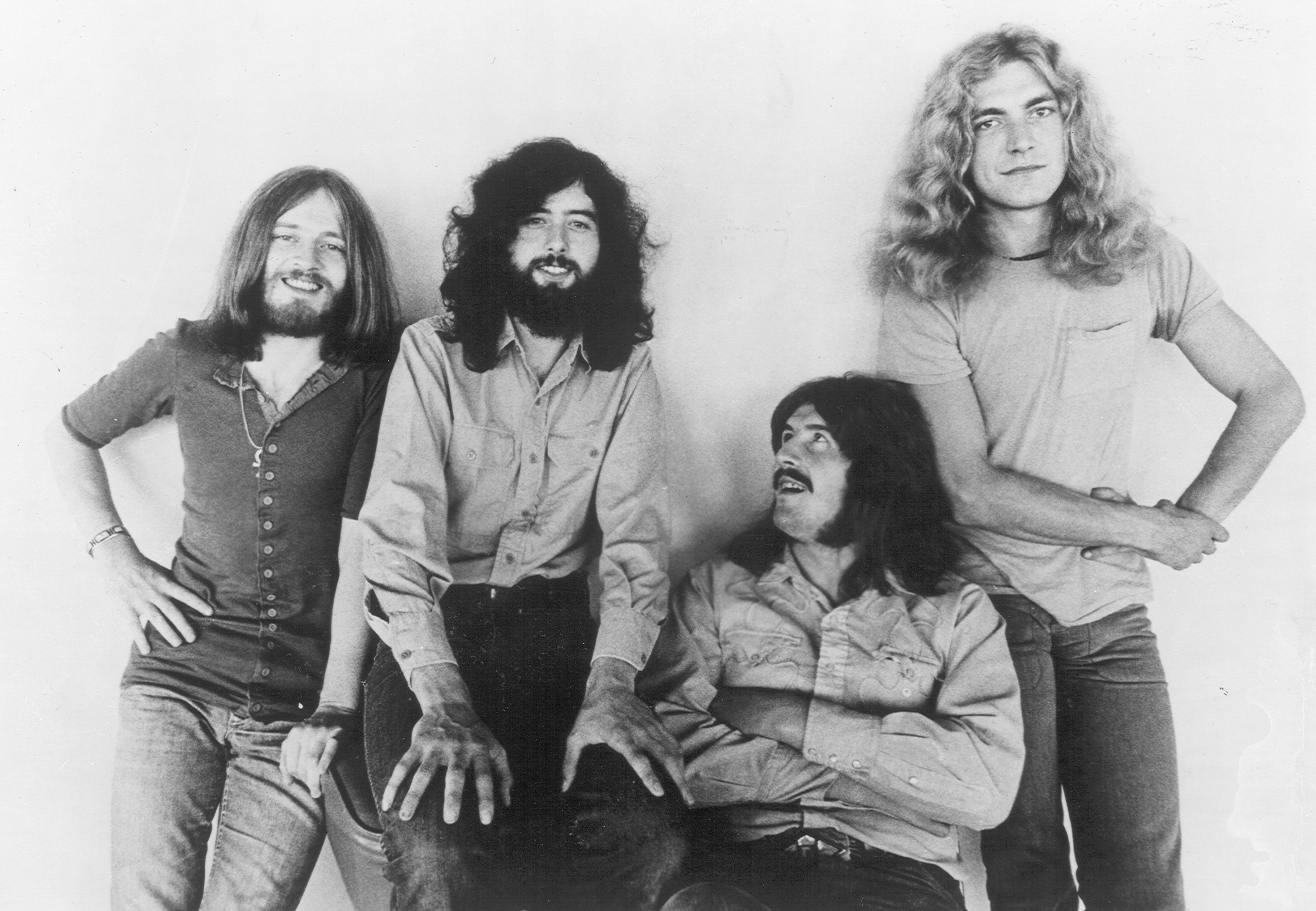
The new group played their first shows as the New Yardbirds, then became Led Zeppelin. The moment they plugged in together, everyone in the room understood something rare was happening. When bassist and keyboardist John Paul Jones first heard Bonham play, he knew instantly that the band was going to work.
The rhythm section of Jones and Bonham became the engine underneath everything, tight and heavy and swinging all at once, and it freed Page and Plant to fly over the top.
The self-titled first album arrived in January 1969, recorded in a matter of days, and it hit like nothing before it. Bonham’s drums were not a background pulse. They were a lead instrument.
You can hear it from the very first track the world heard. “Good Times Bad Times” opens the debut album, and the moment that made drummers sit up was his bass drum work. He played rapid-fire triplets on a single kick pedal, with one foot, at a speed most players could only manage with two.
Drummers put the needle back to the start of the record again and again, trying to figure out how one man did that with one foot. It announced him. Whoever this was, he had rewritten what the instrument could do.
His masterpiece of pure sound came in 1971 on the fourth album, on a song called “When the Levee Breaks.” The band recorded at Headley Grange, a damp old Victorian house in Hampshire, with the Rolling Stones’ mobile studio parked outside.
A new drum kit sat in the entrance hall, a three-story space with a staircase winding up above it. When Bonham started playing in that hall, the sound bounced off the walls and came alive.
Engineer Andy Johns hung just two ribbon microphones up on the stairs above the kit, pointed down, and used nothing else. No close mics, no studio trickery beyond some compression and echo. What came back was enormous, a drum sound so huge and heavy it felt like the walls themselves were playing.
Bonham heard the playback in the truck and gave his verdict in his own blunt language. That was more like it. The opening two bars of that song became one of the most sampled drum beats in music, borrowed decades later by hip-hop and electronic artists from the Beastie Boys to Björk to Massive Attack.
Bonham never chased that. He just played the groove, and the room did the rest, and the sound outlived him by generations.
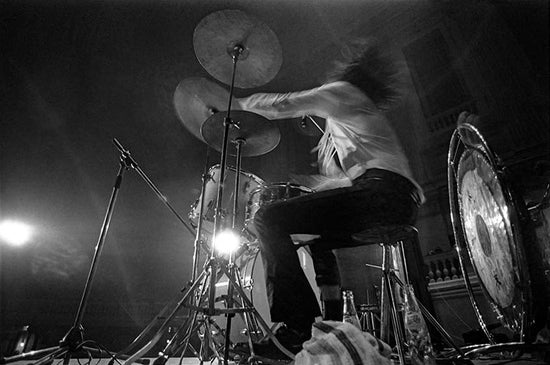
Then there was the spectacle. “Moby Dick,” from the second album, was built around a Bonham drum solo, and on stage it became a ritual. He would put the sticks down and play with his bare hands, beating the drums until they were raw, sometimes stretching the solo past twenty minutes while the crowd roared.
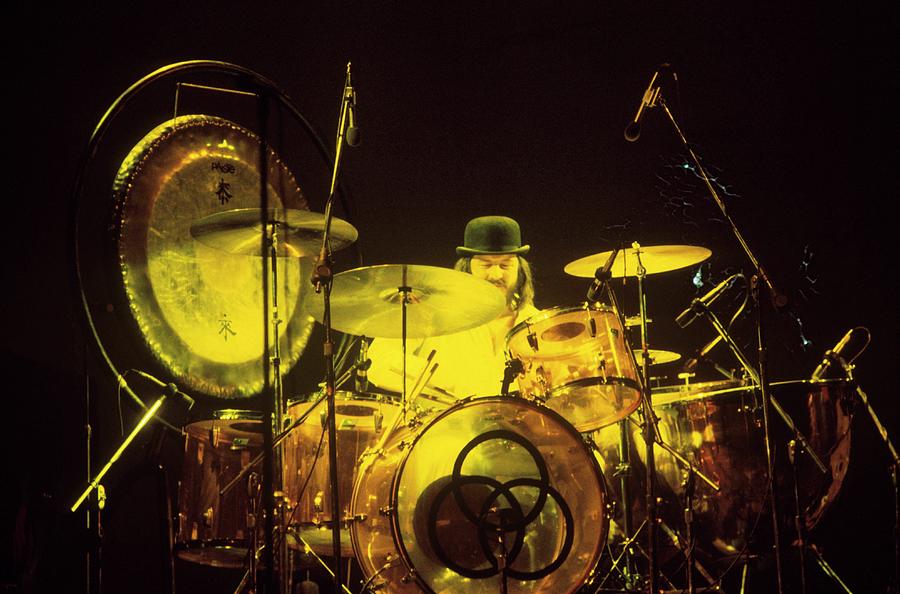
It was showing off, but it was the kind nobody else could match, and audiences came partly to see it. His kit grew larger as the band grew, adding timpani and a gong, and later he switched to a see-through Vistalite kit that let people watch him work.
By the mid-seventies, Led Zeppelin were the biggest band on earth. They flew in a private jet, took over entire hotel floors, and left a trail of wrecked rooms and wild stories behind them. Bonham was at the center of a lot of it. He rode a motorcycle down a hotel corridor. He earned a fearsome reputation on the road.
But away from the circus, he was a different man, a farmer who bred cattle at his home in the Worcestershire countryside, a devoted husband who took Pat everywhere, a proud father to his son Jason and daughter Zoe.
Jason was already showing the same gift, sitting behind his father’s kit as a small boy. The homebody and the wild man lived in the same person, and the gap between them grew harder to manage as the pressure of being in the world’s biggest band ground on year after year.
The pressure took its toll. His playing on 1975’s “Kashmir” showed how far his musicianship had traveled, a slow, heavy, hypnotic groove holding together a sprawling orchestral piece, proof he was far more than a hard hitter. That same stairwell recording trick from “Levee” was used again to give “Kashmir” its weight.
But behind the music, Bonham was drinking more and more. What had started as a young man’s beers had grown into serious, dangerous drinking, made worse by the loneliness and exhaustion of endless touring. He hated being away from his family. The bigger the band got, the heavier the machine became to carry.
On 24 September 1980, the band gathered for rehearsals at Bray Studios, preparing for their first full North American tour since 1977. Bonham was picked up that morning, and on the way he stopped for breakfast and drank four quadruple vodkas, sixteen shots before noon.
He kept drinking through the day and into the evening. Late that night the band went back to Page’s house nearby, and after midnight Bonham fell asleep. Someone put him to bed and laid him on his side.
The next afternoon they found him unresponsive. He had died in his sleep at thirty-two, having choked after a day of catastrophic drinking. The boy who was revived by a nurse at birth, whose survival she had called a miracle, was gone.
What happened next tells you everything about what he meant to the band. Led Zeppelin did not look for a replacement. They did not audition another drummer or try to carry on. Within weeks, they released a short statement saying that the loss of their friend meant they could not continue as they were. The band simply ended.
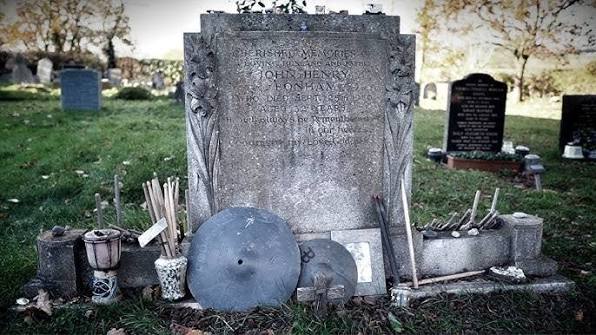
There was no Led Zeppelin without John Bonham, because the thing that made them Led Zeppelin was partly him, the swing and the thunder and the feel that no one else could reproduce.
They had watched the Who struggle on after losing Keith Moon two years earlier, and they chose not to become a lesser version of themselves. They stopped instead.
His influence only grew after his death. Drummers who came up in the years that followed, players like Dave Grohl, Neil Peart, Chad Smith, Dave Lombardo, Danny Carey, and countless others, point back to Bonham as the standard, the man who proved a drummer could be the heaviest and most musical voice in a band at the same time.
In 1995, he was inducted into the Rock and Roll Hall of Fame with the rest of Led Zeppelin. In 2016, Rolling Stone named him the greatest drummer of all time.
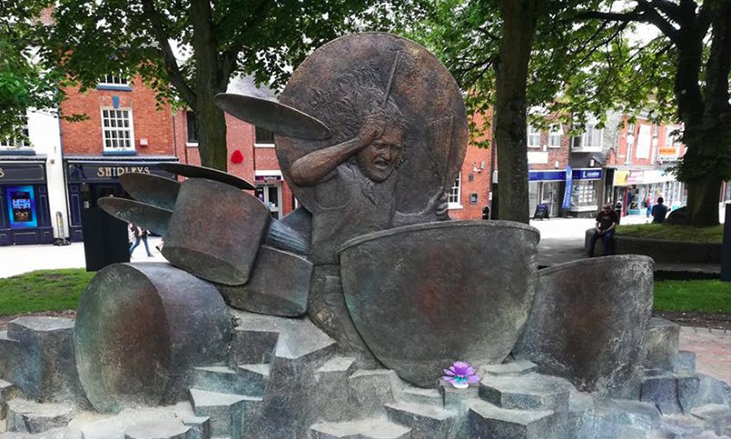
His hometown of Redditch put up a bronze statue of him in 2018 on what would have been his seventieth birthday, and his son Jason grew into a fine drummer who has sat in with the surviving members to play his father’s parts, keeping the groove in the family.
The remarkable thing about Bonham is how little separates the boy and the legend. The five-year-old beating coffee tins with cutlery and the man filling stadiums were driven by the exact same thing: a need to hit the drums and hear the room answer.
He never learned to read music. He never took a lesson. He just felt where the beat should sit better than almost anyone who has ever played, and he hit it harder than anyone dared. The headmaster gave him two options: dustman or millionaire.
Bonham found a third one nobody wrote on the report card. He became the drummer other drummers still measure themselves against, more than forty years after the room went quiet.